Wage claims, feminism and sublimated eroticism in the Central Iberian musical tradition
Translating lyrics from the traditional village music is a challenge. Nevertheless I think it is worth the effort when it is to share lyrics like these. In the video below you have the piece with the subtitles. And the truth is that the message is quite clear and, at the same time, it is said very elegantly.
In the center of Spain there is a music style that is even more unknown than jota, rarely performed nowadays, because few people know the languaje: it is the son.
About jota, we have something ready with the basics, specifically for non Spanish people, here. Like the jota, son is improvised combining melodies from a body of guiding melodies from the people, that are in the personal baggage of the singer. The singer redress the melody in real time. The same happens with the lyrics. The shape of the son allows the group to sing together, as it includes repetitions, so anybody can join to sing in that part.
And it is a huge body of lyrics, most of them short, than can be combined to produce the messages you want. There is also a massive amount of enchanting melodies with an ancient bewitching sound.
Son is performed mainly with percussion and voices. A light accompaniment with string on drone, with the rabel (rebec), can be included. In the picture above you see some instruments used for the son: frying pan, saucepan, mortar, cañera, zambomba, frame drum, bladder rebec.
If there are plunged strings, they are used like percussion, because son is modal, not tonal. The drone can be provided also by the zambomba, that is tuned. In this piece below, the singers sing in several different tones, all of them are allowed by the armonics of the zambomba. Despite being a percussion instrument, zambomba can be tuned to produce the armonics you want.
Vigüela are preparing their new album, which will include some sones. In the meantime, you can listen to this piece that we recorded last Tuesday.
JOTA FOR NON-SPANISH
Learn the basics of the most popular traditional style of music in Spain
“After decades of flamenco fusions and mestizo mélanges, Spain is probably in dire need of some raw, honest roots music […] Folk group Vigüela have the ultimate credentials.”
Since I read these words by Chris Moss in Songlines, it has been in my mind the idea of how needed it is to disseminate the traditional music from the center of Spain. A music that is so unknown, not only abroad (that is logical, as very few efforts have been done so far to explain it for the international audiences), but alsovery neglected inside our country.
I won’t hide how much perseverance this vision made us develope, but also what a pleasure is for us to share it: the music from this land, from this landscape, that inspired such big epitomes of the creation of histories, from Don Quijote to some of the most inspired images of Pedro Almodovar films. In the last months Juan Antonio Torres and me are creating somevideos with a didactic approach and now we wanted to share with you this one, made specially for not Spanish people, that explains, from the basic, the style that is the most popular: jota. Here you are the video and, below, you’ll find some concepts that will be useful if you want to delve more.
*** A short digress: we can make a lecture about this and also Vigüela is available to perform in concert. More about the band, here. ***
IF YOU WANT TO DELVE:
As promised above, here you are some concepts to delve into this huge universe of Spanish traditional music:
Concept of style vs. repertoire
This concept must be explained using a term that would like a kind of opposite: the repertoire. Style is not a song, it is not a corpus of songs. It is a language of communication through music.
Style has some rules, codes, ingredients, let’s say. When performing style, the rehearsal is not present. The performers use the code to create a conversation. It is like when you speak English: you don’t know the conversation from before and you don’t make rehearsal of the conversation. You just talk with the other and you wouldn’t say the same things if you were talking with other people in any other moment. It is a conversation between all the people involved. What will be said, is not predetermined. So you have to pay attention to what is been said. Also the moment to end is not set in advance. Style is fluid. Anyone who speaks the language / knows the code of the style can participate. That’s what it makes it so thrilling.
But, in the opposite, the repertoire concept is prefixed. Songs are premade. Only the ones who know the song can participate. The song has the lyrics, melodies… already predefined. In traditional music in Spain sometimes it is used the term “jota of the village X”. And what is performed under this name is like a still picture of the stream of a river. The style is the stream, moving and unpredictable. The repertoire is the still picture. Moreover, that denomination of “jota XXXX whatever name” is most of the times product of a deliberate creation in order to have something to rehearse and to put in a stage.
Other styles
Jota is one of the styles. You find jota all over Spain in the peninsule and also in the Islands. It is probably the most disseminated and popular of the styles. The others are:
Fandango. Its family is composed by manyvariations: rondeña, malagueña, verata… It is not the flamenco fandango, that has other codes.
Seguidilla. It alsoproducesmanyvariations, some of themveryknown, like the “sevillanas“, that are “seguidillassevillanas“, so, from Sevilecity. In the SouthEastthere are parrandas, peretas, manchegas, gandulas, poblatas… And, well, even when welove it, the “seguidillas” by Bizetcomposed for Carmenopera are not proper seguidillas because it doesn’t use the codes of seguidilla X-D.
Check the comprenhensive interview by Ángel Romero with Jako el Muzikante and learn how the Galician artist Xurxo Fernandes incarnates the historic character of the hustler of the café aman.
The interview unveils all what is behind the work Ven al Luna Park, with statements like this:
The Sephardic identity is based on their language, a language in danger of extinction. My fascination with Ladino is linked to a feeling of debt to the community from which I learned so much, and publishing this work in that same language is an acknowledgement I want to give.
Super quick. Babel Music XP, the professional meeting with concerts that will take place in Marseille in March 2021, official info here, closes tomorrow at 23:59 the application period for artistic proposals.
Don’t miss the opportunity! We have already sent several proposals, what will happen? 🙂
Little by little music returns to the stages. And it may be the moment now for small gatherings in which to celebrate music and friendship, that we are all healthy, our voices are strong and our intruments are tuned.
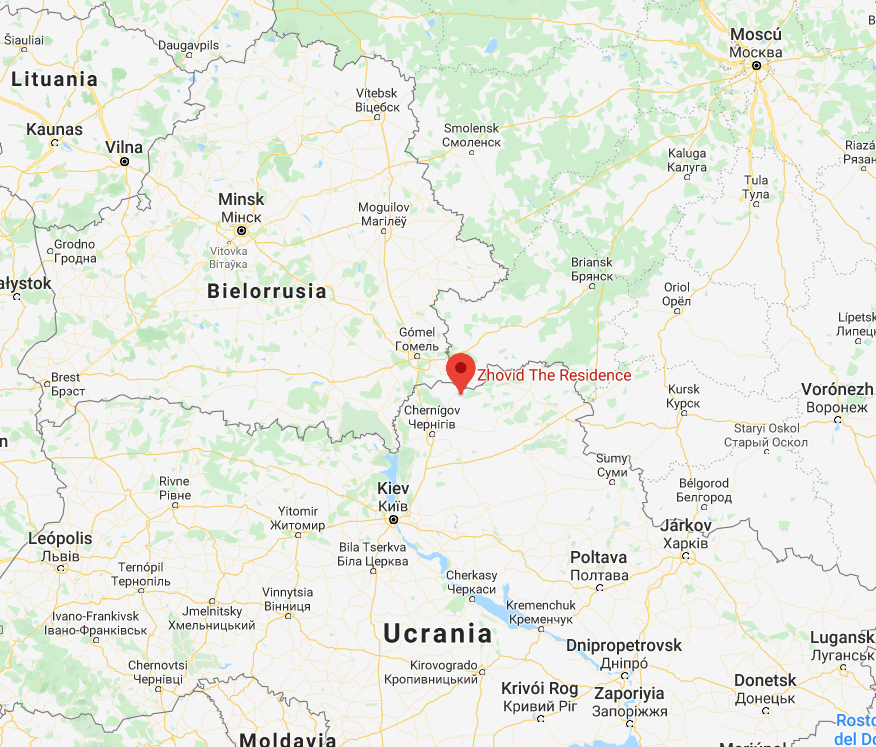
Enjoy with us and with Hudaki Village Band this recent moment at Zhovid the Residence, Ukraine.
Watch the video at the bottom
And if you have the handicap of not speaking Ukranian, don’t worry, here you are the lyrics of these two pieces:
Let’s drink, guys
Hey boys, let’s drink, let’s drink,
while we are still together,
because afterwards we will part,
like sheep in the pasture.
Oh, it is good to be a shepherd
and to be unwed,
looking upon the village
from the highest mountain meadow.
Mariko humiliated me
Hey, I gaze into the valley,
into the valley,
as my friend embraces my beloved.
Oh my God, blonde girl,
Marichko, you humiliated me.
Yea, I gaze into the valley,
into the valley,
as my friend embraces my beloved.
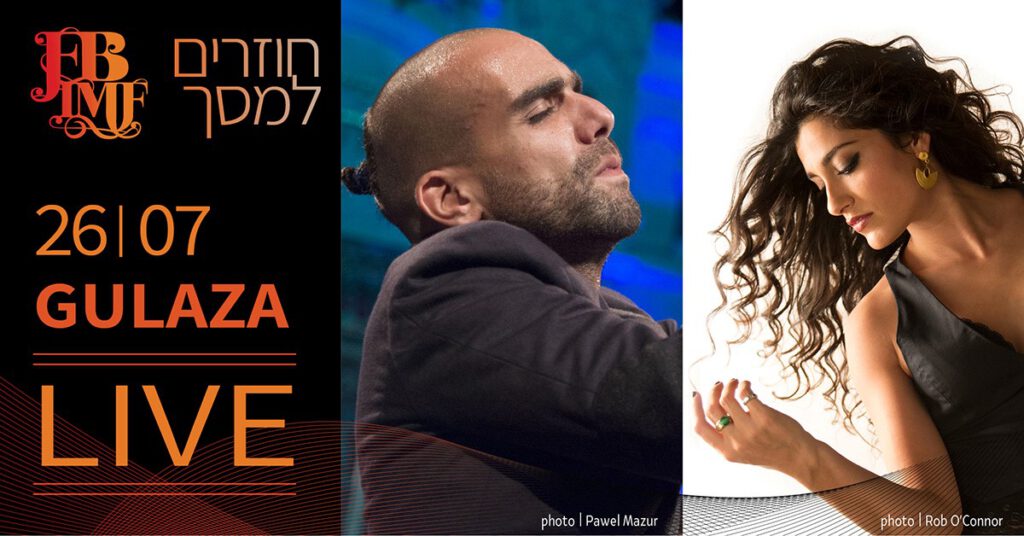
Gulaza hosts Mor Karbassi this next weekend at the concert for the Felicja Blumental Festival that will be broadcasted online at this Youtube channel and at the band’s Facebook page.
What made a man in his 18 years, from a good family from Vienna, abandon his bourgeois life and finally settle in the 3000 inhabitants Zakarpattian village of Nyzhnye Selyshche?
This question came to my mind when I knew that Jürgen, from Hudaki Village Band, was an Austrian. Through that question I got to understand that the story of Hudaki Village Band is the story of the synergy, complicity and the love between Jürgen and the music and the people from this Ukranian agricultural land.
Jürgen is now Yuri and Hudaki is a powerful band of local musicians with an international approach and a careful staging, masters of the alchemy of musical-vibrating happiness.
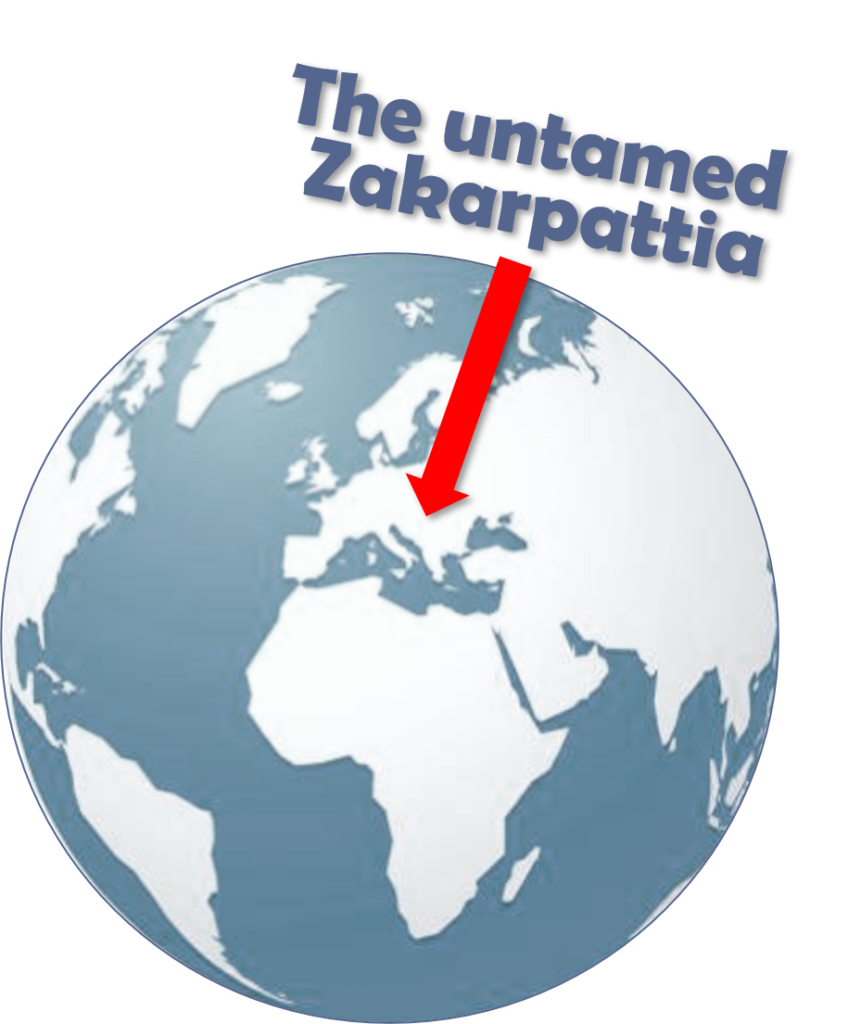
I had the chance to see Hudaki Village Band at the festival 5 Continentes in Martigny, Switzerland, in June 2019. Fortunately, the festival programmed three concerts with them. And if they had been four, I would have seen them four times. Such is the charm of this band, that comes from a little village from Zakarpattia, the oblast on the southwest of Ukraine.
But, back to Jürgen. Let he be himself who explains the steps that took him to unite his path with a bunch of local musicians from Zakarpattia and develop what today is Hudaki Village Band:
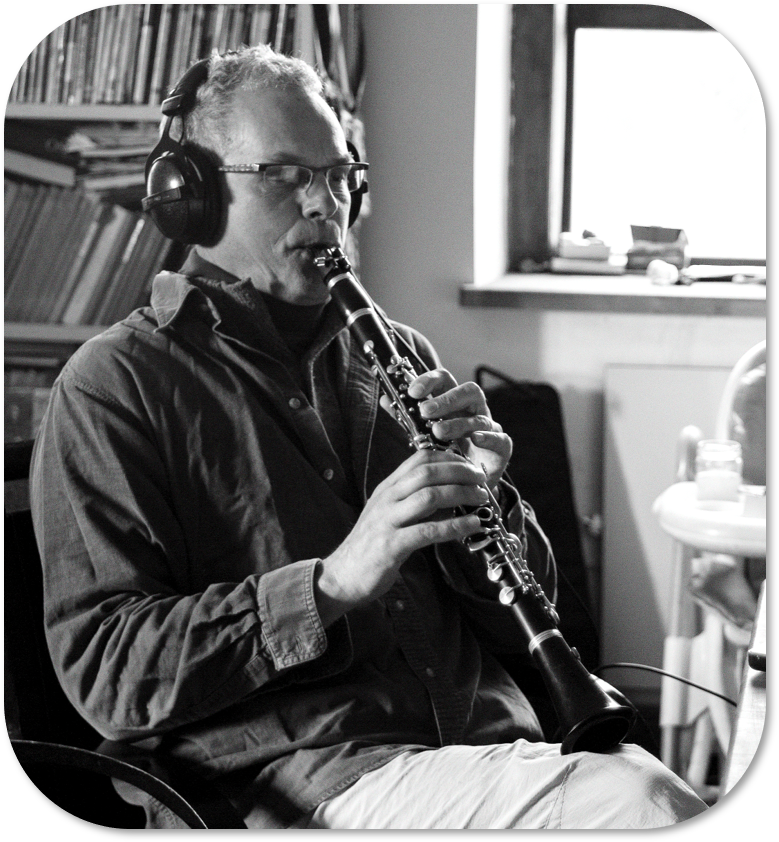
I am Jürgen Kräftner, born 1961 in Vienna, from a “good family”. I finished high school in my home country, studied clarinet briefly at the Vienna Conservatory, not very long, but with a very good teacher, solo clarinetist at the Vienna Symphony Orchestra.
Longo Maï, at the end of the 70s. BY Comet Photo AG (Zürich), in Wikipedia
At the age of 18, it came the foreseeable break with bourgeois life. From 1979 – 1997 I lived mainly in a rural community in Provence. It is called Longo Maï and originated from the 1968 movement: No hierarchies, no pay scale, no individual property, living collectively. Daily life included not only agriculture and handicrafts, mostly for self-sufficiency, but also involvement in socially relevant issues, such as supporting refugees and other socially marginalized groups, running a local radio station, and always – music. Even then I was particularly interested in traditional music from all kinds of countries, especially from Eastern Europe.
The opening of Eastern Europe and the former Soviet Union broadened our horizons considerably. Meeting people from the Ukraine was exciting. I immediately fell in love with a beautiful Ukrainian woman and went there several times. At the same time, I was interested in exposing our socio-political ambitions to a post-socialist environment. The love broke up, but I stayed. That was not always easy, music helped me a lot.
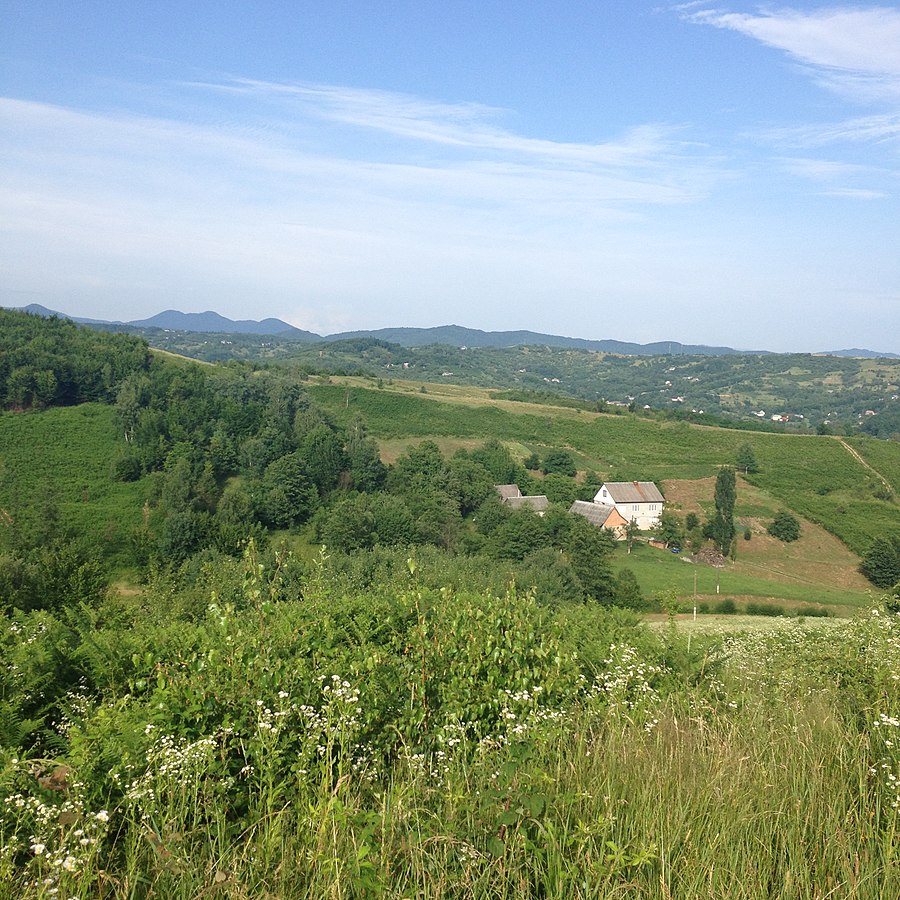
Zakarpattia. By Andre Pop in Wikipedia
Those were years of radical change, in which many people lost everything, not only materially, but also the moral value, systems collapsed. The village musicians I met at weddings seemed to survive this stress and merciless opportunism without any harm. Their music has withstood the kitsch of the Soviet period and also withstood the commercial influence of TV shows.
I only gradually realized the emotional density, the absolute independence and colossal power of this music.
In the beginning, we simply played music together for fun, then the first invitations came from abroad. After the first years we realized together that we have potential as a band.
We started to record CDs, set up a website and rehearse more regularly. With time we realized that we are the only ones in Ukraine who are radically committed to authenticity on the one hand, but don’t reproduce rigidly handed down folklore on the other hand. Our musicians are “real”, we don’t have to pretend. That’s also the reason, why we don’t wear traditional costumes, which nobody in this area has been wearing since World War II at the latest.
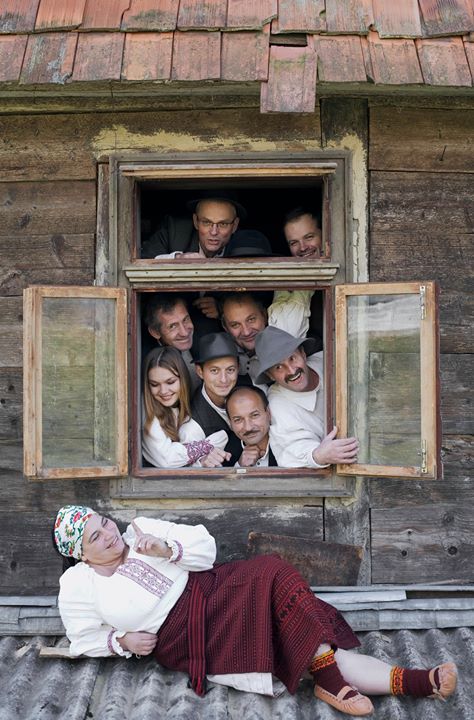
My task here, even after almost 20 years, remains to strengthen the self-confidence of the band members, to insist again and again on the strength of the traditional music, without compromising on kitsch and commerce. The most important, we still have fun making music together, just like in the beginning. The fact that we have been playing with practically the same line-up since 2001 is probably the clearest indication of this.”
In 19 years of performing in hundreds of festivals and concert halls across Europe, the band has learned to make their archaic, night-time moments of happiness accessible to the uninitiated. Hudaki Village Band has performed in the Sziget Festival in Budapest, Fusion, Rudolstadt and Bardentreffen in Germany, KlezMore in Vienna, Notes d’Equinoxes Delemont and Festival des 5 Continents in Switzerland, Respect-Prague, Balkan Trafik Brussels, Rudolstadt, Les Suds Arles in France and many more.
Ah, and you might wonder what does hudaki mean: in the Maramures region, a mountainous area of South-west Ukraine on the border with Romania and Hungary, village musicians are called hudaki. Enjoy this delighting bunch of hudakis!
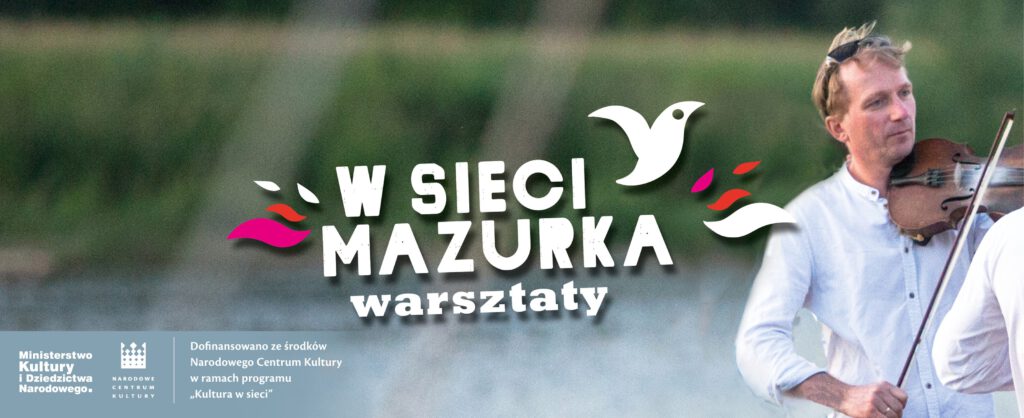
It is not easy to catch Janusz Prusinowski in the same place for several days. Apart from his activities as a cultural promoter, leading the All the Mazurkas of the World Festival, with its several editions every year, he and his Kompania are one of the most demanded artists in Europe in the field of heritage music and dance.
It had to come a global pandemic to make him stay in his native land of Mława enough time, in this exceptional situation, to record a series of 13 video workshops, dedicated to several village masters. In the videos, Janusz explains the basics about their playing, also supported by historic recordings made by Andrzej Bieńkowski, for the archive of the foundation Muzyka Odnaleziona.
“In the Net of Mazurek” starts on Friday 17th of July, in this strange Summer of 2020. The videos will be published at 19h at this Youtube Channel. Each of the recorded videos will have a in real time online meeting some days after, with the registered pupils.
Janusz has devoted his life to learn and disseminate the work of those masters. He incarnates with his music all that knowledge, nuances, expresivity, unique to the rawest Polish peasant music. The result is a mind-blowing music, very distinctive and of a unbridled beauty, made with fiddle and with some local versions of other instruments, like the harmonia polska (accordion), cymbałe (psaltery), the drum baraban, the frame drum bębenek, a kind of “cello” used for rhythm and drone called basy. And, of course, the human voice.
Let’s let Janusz explain what is all this about:
The first video will be released on Friday 17th and the protagonist will be the fiddler Jan Lewandowski and his mazurek. On Mondays and Fridays there will be an online meeting in real time, at 19h, with the registered pupils. The details for the registrations are in the FB page and for any question, the person in charge is Ms. Joanna and her email is wsiecimazurka@gmail.com.
The materials produced for this project will stay available in Youtube after. The project is funded by the National Centre for Culture under the programme Kultura w sieci.
This website uses cookies to improve your experience. We'll assume you're ok with this, but you can opt-out if you wish.AcceptRead More
Privacy & Cookies Policy
Privacy Overview
This website uses cookies to improve your experience while you navigate through the website. Out of these, the cookies that are categorized as necessary are stored on your browser as they are essential for the working of basic functionalities of the website. We also use third-party cookies that help us analyze and understand how you use this website. These cookies will be stored in your browser only with your consent. You also have the option to opt-out of these cookies. But opting out of some of these cookies may affect your browsing experience.
Necessary cookies are absolutely essential for the website to function properly. This category only includes cookies that ensures basic functionalities and security features of the website. These cookies do not store any personal information.
Any cookies that may not be particularly necessary for the website to function and is used specifically to collect user personal data via analytics, ads, other embedded contents are termed as non-necessary cookies. It is mandatory to procure user consent prior to running these cookies on your website.

 Son is performed mainly with percussion and voices. A light accompaniment with string on drone, with the rabel (rebec), can be included. In the picture above you see some instruments used for the son: frying pan, saucepan, mortar, cañera, zambomba, frame drum, bladder rebec.
 Since I read these words by Chris Moss in Songlines, it has been in my mind the idea of how needed it is to disseminate the traditional music from the center of Spain. A music that is
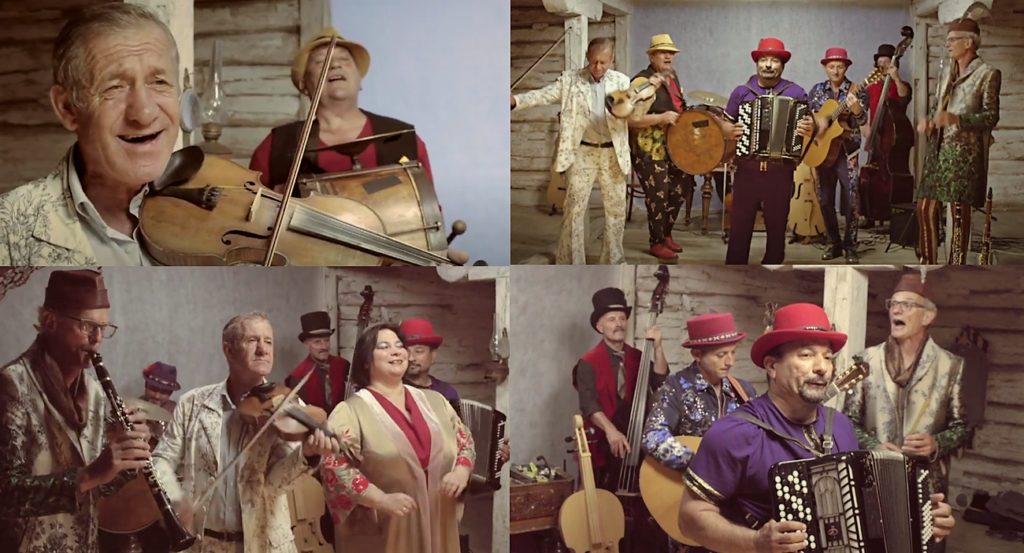
 This question came to my mind when I knew that Jürgen, from Hudaki Village Band, was an Austrian. Through that question I got to understand that the story of Hudaki Village Band is the story of the synergy, complicity and the love between Jürgen and the music and the people from this Ukranian agricultural land.
 Jürgen is now Yuri and Hudaki is a powerful band of local musicians with an international approach and a careful staging, masters of the alchemy of musical-vibrating happiness.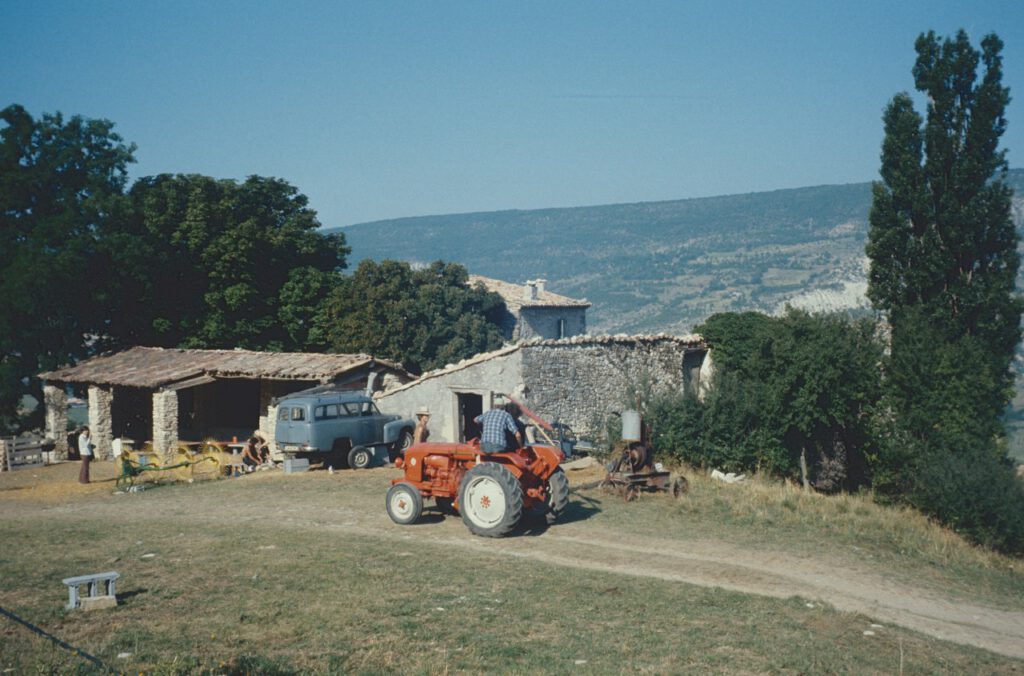
 My task here, even after almost 20 years, remains to strengthen the self-confidence of the band members, to insist again and again on the strength of the traditional music, without compromising on kitsch and commerce. The most important, we still have fun making music together, just like in the beginning. The fact that we have been playing with practically the same line-up since 2001 is probably the clearest indication of this.”