
Download the complete dossier, here.
- “Gönültaş is a real star”. Simon Broughton, UK
- “Although he fills concert halls across Europe and around the world, he seems genuinely thrilled and touched by every encounter with the audience”. Ivan Laic, in Ravno do Dna, HR
- “A wonderful artist and group”. Chris Eckman, SI
- “The world needs more people like Ali Doğan Gönültaş”. Jan de Leeuw, NL
- “A glorious concert”. Simon Glinn, UK
- “A rare authenticity… above all there is the spontaneity and fluid communication that this artist knows how to generate between his musicians and the audience.”, Jordi Martí, ES
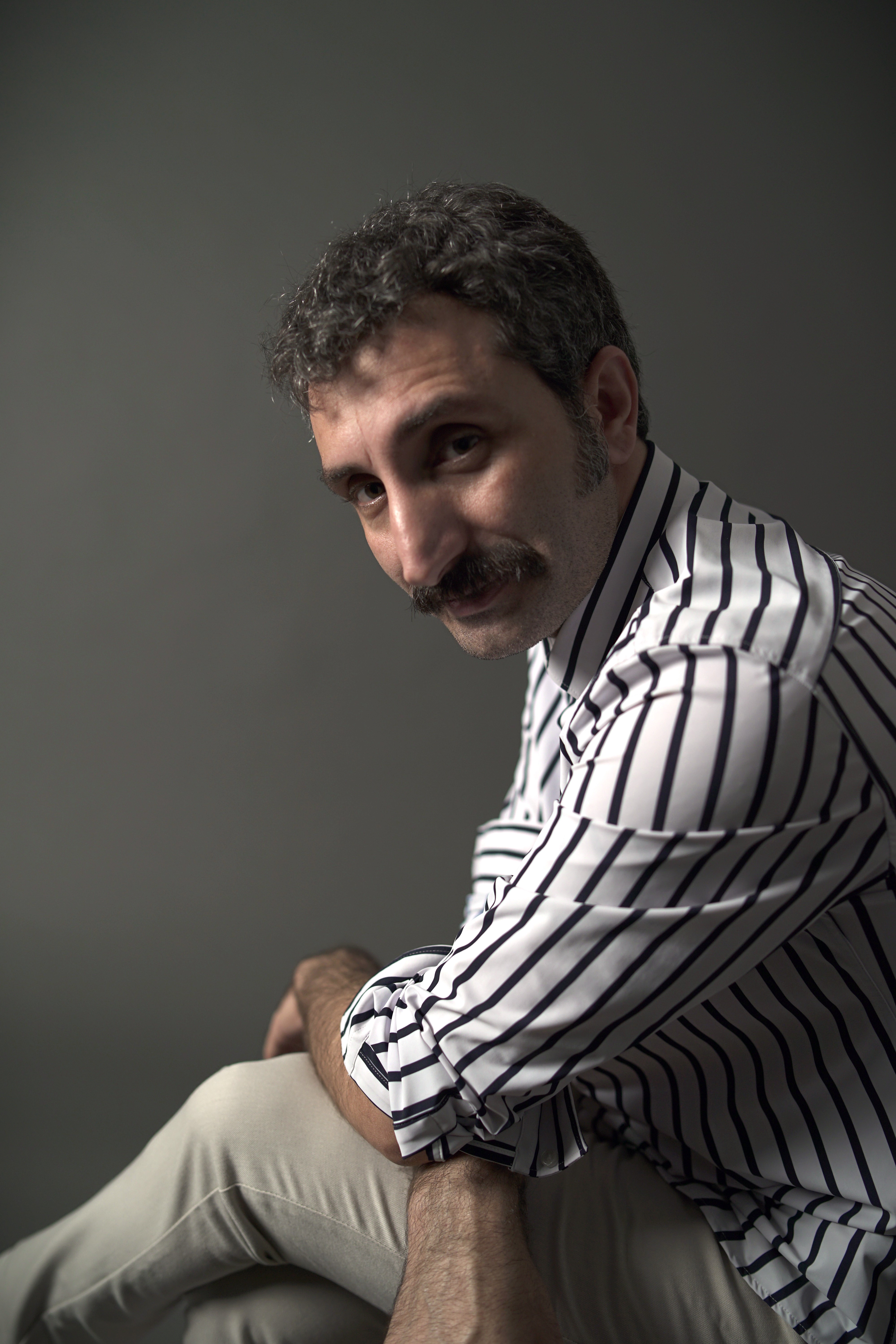
Ali Doğan Gönültaş was born in the mid-1980s in Kiğı, a rural village in the rugged mountains of Eastern Anatolia, in a Kurdish family for whom, as is the case with most Alevi families, music is an essential way of transmitting the history of their people. Soon after, the family had to emigrate to the city. Once in Istanbul, young Ali was encouraged by his teachers and elders to sing. Because he already had that gift—the gift of natural musicality, which he refined through his artistic activities and composition work.
His time at university studying archaeology and cinema provided him with a deep focus on research and source analysis, as well as the ability to translate that background into a highly captivating artistic and communicative language. Heritage, talent and stagecraft.
After ten years, two albums and hundreds of concerts with the fascinating band Ze Tîje, Ali Doğan produced and launched his first album, Kiğı, in 2022. It was the result of fifteen years of research, conversations with elders and work on musical arrangements. In Kiğı, Ali sheds light on the languages and cultures of silenced minorities in Turkey, such as the Kurds and Armenians. The album paved the way for performances on prominent European stages. The reception of his album Keyeyî (2024) confirmed the magic.
Since 2023, Ali has performed in 25 countries across Europe, North Africa and the Middle East, including prestigious venues such as Fundação Gulbenkian (with a sold-out Grande Auditório, seating 1,203), Elbphilharmonie Hamburg (featuring one trio performance and another with dengbêj Saîdê Goyî, both sold out), Philharmonie Luxembourg (sold out) or the National Theatre of Sarajevo (for the Sarajevo Jazz Festival). He also brought his dynamic live performance to open-air stages such as the Rudolstadt Festival in Germany or the town hall square in Valencia, Spain.
2026: A New Album
In mid-2026, Ali is focused on the artistic production and recording of a new album in which his relationship with Seîdê Goyî is a central theme. Traditional pieces and original compositions by both Ali and Goyî, shaped through dynamic arrangements, will form this work, exploring friendship, intergenerational relationships, cultural identity and the celebration of being together.
Watch Ali in Bostano below. Listen to the album, here.