July ’26 — Identity, Displacement and Endangered Languages, conversacion with César Olivares (Capibara Music) and + (#97)

This month👇

◻️Editorial
    🔸Exporting Music in Minority Languages

◻️Songs in Motion: Stella Papalamprou on Identity, Displacement and Endangered Languages

◻️Interview with César Olivares, Capibara Music

◻️Brief news from the media, charts and sister projects

◻️Open calls and professional events:
    🔸Global Toronto
    🔸Afro Pepites

◻️Meet me at ✈️


➡️ This is the subscription link

Hello, how are you? 

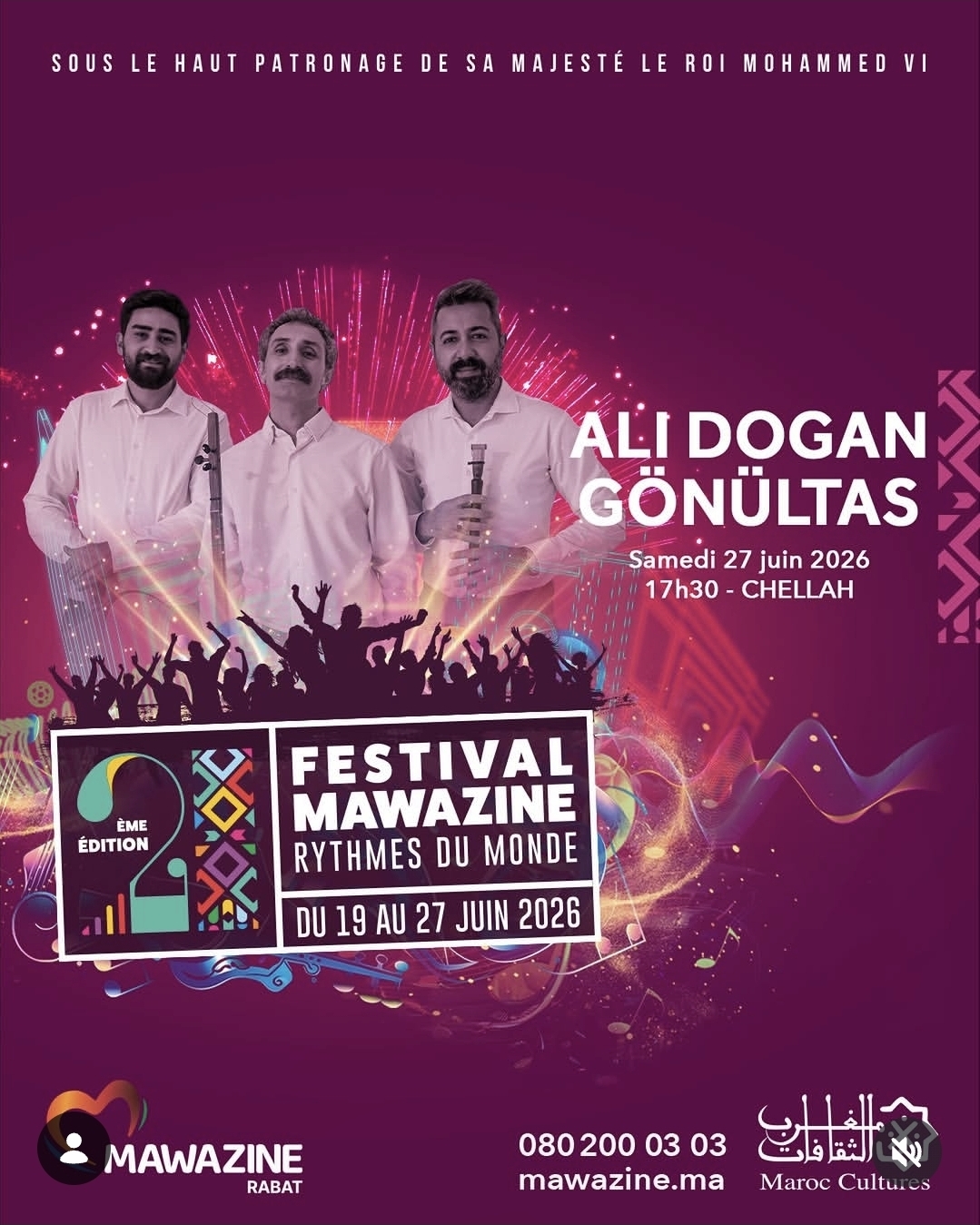
I’m doing well. I’m writing this from home, with August about to begin—a month when many people will be on holiday. I won’t, actually. I won’t have to travel by plane, but the next few months will be hectic. In August, Vigüela will be recording their eleventh album. Stella Papalamprou will release her debut recording in September. Hudaki Village Band have their new album ready, and we need to start making some noise about it. Ali Doğan Gönültaş will also release his third album next autumn. There will be many opportunities to introduce more people to the wonderful art of all these musicians.

In the photo, I am with Ali Doğan Gönültaş in Arles on 13 July, the evening before the workshop he led there over the following three days and his concert on Friday the 17th, which sold out. We also sold a great many records. It was a beautiful event, held in the remarkable setting of the Alyscamps necropolis.

Before all that, however, I was in Sofia, as I mentioned previously, for the A to JazZ World Music Showcase and jazz festival. There, I had the opportunity to take part in a panel entitled “Exporting Music in Minority Languages in Europe”. This is an area I work with every day through Ali Doğan Gönültaş, whose mother tongue is Zazakî, Stella Papalamprou, whose debut album is entirely in Pontic Greek, and Xabi Aburruzaga, whose songs are in Basque. I have summarised my presentation below.


Exporting Music in Minority Languages: Breaking the Visibility Barrier


“The death of a language inevitably leads to the disappearance of various forms of intangible cultural heritage such as performing arts, social practices, rituals and festive events, traditional crafts and the priceless legacy of the community’s oral traditions and expressions, such as poetry and jokes, proverbs and legends.” Preface of the Atlas of the World’s Languages in Danger, Irina Bokova, Director-General of UNESCO at the time of publication


Before the event, I asked Ali, Stella and Xabi what singing in their own languages means to them. You can read their answers here and download my presentation, here.

At A to JazZ, I presented the talk “Exporting Music in Minority Languages in Europe: Breaking the Visibility Barrier”, a reflection on the difficulties faced by music performed in languages with little presence on the international circuit.

The starting point of my presentation was an apparently simple question: is language really the barrier?

Not all languages described as minority or minoritised are in the same situation. Some examples: Basque (Euskara) benefits from significant institutional and community support; Wolof is a major language in its territory of origin but becomes minoritised within the European diaspora; Zazakî, meanwhile, is vulnerable, politicised and frequently overlooked, even within the Kurdish context itself. Speaking of “minority languages” as though they all represented the same condition prevents us from understanding the different power relations that determine their visibility.

However, when music performed in these languages attempts to circulate internationally, the market tends to react in much the same way: it is considered difficult, overly specific, local, risky or suitable only for a niche audience. The barrier is not merely linguistic.

Listeners of K-pop do not need to speak Korean in order to connect with the songs. Music is not a comprehension test or a reading exercise: it is voice, rhythm, sound, body, emotion and atmosphere. The real difference lies in exposure, repetition and the desire that the market manages to create around particular kinds of music. Some languages are presented again and again as global, while others are confined to the local sphere before audiences have even had the opportunity to hear them.

To illustrate these different realities, I drew on the work of three artists. In the music of Ali Doğan Gönültaş, Zazakî is not a decorative element or an added colour: it is the ground from which his work grows. In contexts where language and literature have been suppressed, songs preserve words, memories, rhythms and ways of telling stories that institutions have failed to protect. Some languages do not travel through institutions: they travel through songs.


“In a non-state, whose language and literature are suppressed, everything is sung to be remembered and saved.” Eleni Ziliaskopoulou, M.A., Planet Radio 90,6.


Stella Papalamprou represents a different situation through Pontic Greek. Her music keeps alive the voices, stories and experiences of people who lost their homeland but not their identity. Here, the risk is not only silence or complete disappearance, but that the language may survive mainly as a beautiful relic: sung, remembered and performed, but used less and less as a living language.

The third example was Xabi Aburruzaga and Basque, a language with a much stronger local structure whose music nevertheless continues to face limited international familiarity. Institutional support can strengthen a language without automatically making the international market perceive its music as exportable.

The central conclusion of the presentation was that the barrier is not comprehension, but circulation. What matters is which music is programmed, promoted, playlisted, reviewed and repeated until it becomes familiar. Many successful songs circulate worldwide without most listeners understanding their lyrics. The problem is not that certain languages cannot be universal, but that the market has not yet learnt —or has not wished to learn— to hear them in that way.


Remember: if you have any news of interest for our community, let me know. Thank you very much for your attention.
Araceli Tzigane | Mapamundi Música | +34 676 30 28 82

INTERVIEW WITH STELLA PAPALAMPROU:
Songs in Motion: Stella Papalamprou on Identity, Displacement and Endangered Languages

Interview for the European Folk Network

~~~~

“When you lose your land, your home, and your graves, language and song become the only homeland you can carry with you.” Stella Papalamprou

~~~~


Sometimes different paths lead to similar reflections. Or rather, different experiences offer us diverse perspectives on the same subject. Minority languages, migration and their impact on music also feature in this interview I conducted with Stella Papalamprou, which you can read in the July newsletter of the European Folk Network. You can find it here.


INTERVIEW WITH CÉSAR OLIVARES, CAPIBARA MUSIC

The relationship between music and migration is a recurring subject in my work and reflections. At A to JazZ, I had the opportunity to meet César Olivares. He had contacted me beforehand to remind me about Cholo Chicha’s performance, and on 3 July we were able to spend a few minutes together after the round of speed meetings with the artists so that he could tell me about Capibara Music.

As I was a member of the jury for the A to JazZ showcase, I was already familiar with Cholo Chicha and was looking forward to seeing them live. Their full concert is available on video, and I have included it below in case you would like to listen to it while reading the interview.

I discovered César’s initiative at a very early stage, and I hope it thrives and that I will be able to share more news about them here in the future. In the meantime, let us hear from César himself about Capibara Music.

The A to JazZ showcases were recorded on video, with excellent sound and picture quality. In addition to Cholo Chicha’s performance, you can watch the others on the festival’s YouTube channel: https://www.youtube.com/@atojazzfestival

Araceli Tzigane: Capibara is the initiative you were telling me about.
César Olivares: Capibara Music, exactly.

AT: It is an association devoted to mapping Latin American artists who are based in Spain.

CO: Yes. We work mainly with migrant musicians —almost all of them are migrants— and with Latin American roots music, regardless of genre. For example, we work with world music, folk music, quite a lot of traditional music and jazz as well. Through different tools, such as booking, production, internationalisation and professional support, we help them and work with them in those areas.

The association is new: we have been operating for less than six months. We are at an initial stage of consolidating our message, recruiting members, establishing partnerships and, above all, making ourselves known. That is why initiatives such as this interview are extremely valuable to me.

Capibara Music grew out of my own experience. I have lived in Spain since 2020; it was the second time I had come to Spain. Because of issues with permits and documentation, I had no job and was not allowed to work, so I took up the violin again. I play the violin and began performing in the street. A friend and I played tangos, sambas and boleros. During those conversations in the street, we talked about the lack of initiatives that could help or bring some order to the scattered Latin American diaspora in Spain. There are some very high-quality musicians, but they do not have access to the same spaces and face many more barriers to entry.

In Catalonia, there is also a language barrier. For us Spanish speakers, it is easy to overcome, but it remains a barrier, alongside the bureaucratic one. In those conversations, we would say that something had to be done: at the very least, we needed to create a legal framework that would allow us to issue invoices, register professionally and, ultimately, become professionals and make a living from this. Not become millionaires, but simply make a living from it. That is why it takes the form of an association: if the aim were simply to make money, I would set up a company.

At Capibara, we work in three areas. The first is circulation. We have an internal roster of around seven bands and are seeking funding to develop an annual professional support programme focused on internationalisation and circulation.

The second area is production. Two other members have recently joined who have contacts and somewhat greater financial resources. This may allow us to invest in bringing artists over on tour, securing dates in Spain or working through the networks of contacts that we gradually build.

The third area, which is very important to me, is training, education and research: being able to publish, conduct research and provide training. I am a teacher and several of the musicians are too, either out of necessity or because they enjoy it. That is where this other dimension of sharing knowledge comes in. Broadly speaking, that is what we do with Capibara or, more accurately, what we want to develop from now on.

AT: Before the interview, we were talking and I was saying that it seems as though there are hardly any musicians from Latin America in Madrid. There are some Cuban musicians who regularly perform at certain clubs, but there must be many more whom I do not know and have no idea where to find.

Sometimes we see posters for Latin American artists coming to perform at a nightclub —I mean posters pasted up in the street. I imagine there is a circuit within those communities that they know and use to communicate with one another, but which is completely unfamiliar to those of us who have spent many years producing world music programmes. What is happening?

CO: Life itself and its problems. Migration is often forced or takes place because there are not enough opportunities in people’s countries of origin. When you arrive in a new place, it is already difficult to establish yourself professionally and deal with bureaucratic matters, so many other things fall by the wayside. Some communities are also very closed.

We Latin Americans share a language and tend to gather among ourselves, but we are scattered and disorganised. What you find is a great deal of musical quality, but also considerable dispersion, little professionalisation and limited access to something as important as visibility.

Part of our work involves mapping each person’s situation. Through making music, for example, I was taken in by the Argentine community: I play a great deal of Argentine folk music and, through that, I also got to know that community. Through the band I work with, I met the Peruvian community, while I am Chilean. That is how we gradually come together and discover that, in fact, we are all looking for something similar.

The problem is that we do not have the tools that exist in other countries, as they do here in Europe, because in Latin America, culture often does not receive the institutional support it deserves. Culture tends to come into conflict with institutions, so the two do not usually work as allies, as they do elsewhere.

The Argentine community is very large in Europe and especially in Spain. There are also many high-quality artists and very active communities from Colombia, Peru, Chile and Argentina.

Juan Antonio Vázquez: These communities you describe seem like somewhat separate islands. Is there any point or scene where they come together? Or does it work in such a way that someone might know the music circulating, for example, in the Ecuadorian or Venezuelan communities, but not know what the Argentines are doing?

CO: Yes, although there is a common thread. In Argentina, people talk about peñas, places where folk music is played. In Chile, they are also called peñas and there are jam sessions as well. In Barcelona, where I live, these kinds of gatherings are becoming somewhat more structured. They are really occasions for people to come together because they miss their homeland, and there are things we will not compromise on, such as food and music. We will preserve them wherever we are.

Each community has its own celebrations. The Bolivian and Ecuadorian communities are among those I have found most difficult to get to know from the inside. Bolivia, in particular, has a very strong tradition and a great determination to preserve it. It is not so much that they do not allow anyone else in, but rather the idea that they are the ones who play that music. That is also respected and understood.

Folk music has that positive side, but also that difficulty: it is often not very permeable because the aim is to preserve it. To find out what they are playing and where they meet, you have to look for those gatherings, those peñas or what might they be called in Spain?

AT: A ronda, going on a ronda.

CO: With food, drink, family, friends and the guitar playing afterwards.

AT: It would be a ronda in central Spain.

CO: In any case, folk music performed by new generations is undergoing a revival and, in many cases, is strongly influenced by jazz. Afro-Peruvian jazz, with all the rhythmic mixing it incorporates —the festejo, the cueca and other rhythms— is producing some very good musicians and bands, for example.

Later in the interview, César mentions this Barcelona-based duo, Músicas Migrantes. In the video, they are joined by a double bass player. If you feel like listening to something calmer than Cholo Chicha, or simply enjoy Ibero-American song, make sure you give it a listen:

AT: All of this seems to be somewhat underground, that is, outside the institutions. I imagine these communities do not have a particularly close relationship with the embassies of their countries of origin in Spain either.

CO: There may be a relationship when it is politically convenient for the embassies or in connection with very specific celebrations, but there are no dedicated support schemes or, if they exist, they are very small. Chile has quite a few support schemes and Argentina also offers some, but everything varies depending on the political orientation of the government. For some political groups, culture is not a priority. In addition, people living abroad often left for a reason and simply may not receive support.

AT: Of course. That is what I imagined.

CO: Sometimes we remain underground because there is no other option and, at other times, because focusing exclusively on Latin American roots music is also a political choice. One of our aims is to open up spaces. We know that we will remain on the margins; we do not mind and we do not feel uncomfortable there. But we want to create spaces so that we have a voice, prevent music from other places from being folklorised or exoticised and ensure that, when institutions talk about migrant inclusion or diversity, it is we or associations of this kind who have the ability to make decisions and contribute programming proposals and ideas. So that, once again, it is not other cultures speaking for ours.

AT: With this access to the communities, are you as an association managing to reach specific individuals? It seems very important to me to gain access to the right channel, which is sometimes a particular person who opens the way so that everyone else hears about something. Is that what is happening?

CO: Yes, for example, through opportunities such as this one, which allow us to get to know you and come into contact with more people from other countries. Few people are devoted to doing what we do because it is extremely arduous work and often goes unseen.

Sometimes you work with bands that do not know what entering the music industry means or do not want to enter it. They may also see figures such as the booker or producer as someone who only wants to make money from them. However, little by little, they realise that these kinds of professionals are necessary to open up spaces, speak to the right people, position what they are doing and even help empower them.

Implicitly, we also do empowerment work with the musicians because they feel that they are no longer in their own land and may feel somewhat displaced. We are “walking on eggshells”, as we say in Chile: moving forward step by step, trying not to bother anyone. But there comes a point when we understand that we are not bothering anyone: we are simply making an existing reality visible. As one journalist said, Spain has never been and will never be white. It is a mixture, a country that has been mixing for centuries, and that reality cannot be ignored. When inclusion truly happens, with a voice and a vote, we will be there because we will already have done this groundwork.

AT: Would you like to add anything else?

CO: Above all, people should look us up at capibaramusic.com and on Instagram to discover our roster. We work mainly with world music, jazz and folk music. There are some excellent projects. We are working with bands and artists such as Calle Mambo, Kumbia Boruka, La Dame Blanche and Cholo Chicha.

There is also a duo called Músicas Migrantes, which reappraises Argentine folk music through acoustic guitars and vocal interplay. They are very good. So, yes: follow us.

Thank you, César!
➡️ And you can follow Capibara Music on Instagram


BRIEF NEWS FROM THE MEDIA, CHARTS AND SISTER PROJECTS 


🔸#1 for Transglobal World Music Chart in July of 2026 has been: Fatoumata Diawara’s Massa (Nø Førmat!)


🔸Beyond the Spotlight – a new editorial in partnership between WOMEX and TWMC.
From the website of WOMEX: “We have been working on a new regular feature for Backstage – Beyond the Spotlight. In partnership with Transglobal World Music Charts, this section will highlight scenes, labels and projects that might not get as much attention as they deserve, shining a light on exciting sounds from around the world.” 

Learn more and read the first issue, about Buh Records, here.


🔸Mundofonías: the favourites of July have been Raúl Cantizano & Sebastián Cruz’s Inmediato (Lovemonk), Remon Nakanishi’s Yoakegarasu no wataru made / Till the ravens rise at dawn (Doyasa!) and Nubras Ensemble’s Nubras (Liburia)


OPEN CALLS & PROFESSIONAL EVENTS

This section is open for news. It is free of charge. You can let me know if you have any open call of relevance to the community.

THESE CALLS ARE NEW IN THE NEWSLETTER

🔸Global Toronto 2026 
◻️Application deadline: Wednesday, August 12, 2026 at 11:59 PM EDT
◻️When and where? November 8–11, 2026, in Toronto
◻️What is it? “Global Toronto is for artists and music sector professionals looking for opportunities to present new work, discover artists, build professional knowledge, and develop industry relationships.” Read more, on the official website.
◻️Who can apply? From the application form:
· Musicians from around Canada who play with global music traditions in innovative ways, with particular emphasis on platforming artists who explore and experiment with underrepresented genres, instruments, and artistic approaches.
· Immigrant and newcomer artists who have established careers in their countries of origin but who are seeking to build a network in the Canadian music industry.  –> 
It appears to be aimed mainly at artists based in Canada, but the application form includes “Outside of Canada” as an option in response to the question “Where are you currently based?”
· SWM Incubator Alumni
· Artists who are actively working on their project to move beyond their local scene, with clear goals of growth and “visibility”.

THIS CALL WAS ALREADY INCLUDED IN THE PREVIOUS MONTH

🔸Afro Pepites Show #16
Open to artists from Africa, the Caribbean, South America or any other artists inspired by Africa. Free for artists & labels from Africa and Southern America. A membership fee of €20 for other cases. 

Applications are open until 30 September 2026. According to their call: “At a time when many talented creatives struggle to access communication and visibility tools, the Afro Pepites Show reaffirms its mission: to support, promote and give visibility to African, Afro-descendant and Afro-inspired artistic talents, regardless of their country of origin.

✨ Selected projects will benefit from:
1) Free and targeted visibility within our network
2) Exclusive promotion of your project
3) Privileged access to the Motherland Show to expand your network, explore new opportunities and build your skills.

Open to: Musicians, dancers, humorists, storytellers, poets, writers, painters, sculptors, street artists, stylists, photographers, film directors, and inventors (new).

If you have any questions, please email: Mo.Show@lereveafricain.com” .


MEET ME AT

  • 4-5 September, Tavira (Portugal). Concert by Ali Doğan Gönültaş at the Feira da Dieta Mediterrânica. World premiere of the collaboration between Ali’s trio with Mario Pousada.
  • 25-26 September, Budapest. Hungarian Heritage House Days
  • 8-10 October, Bayonne (France). Workshops and concerts of Vigüela with Sara Cano at Haizebegi Festival.

June ’26 — In depth with Ian Brennan, talk with Ola Kovalevska, AI and music and the usual sections (#96)

This month👇 

➡️Editorial
🔸Music Used to Train AI, After Ruth Koleva’s Claim
🔸Mapamundi Música sync catalogue

➡️In Depth with Ian Brennan

➡️Talk with Ola Kovalevska – Urban Lys

➡️Brief news from the media, charts and sister projects

➡️ Open calls and professional events:
🔸Babel Music XP
🔸PIN Conference
🔸Afro Pepites

➡️Meet me at ✈️


Special format:
This issue is closer to a magazine than to a standard newsletter. So…

download the PDF version here.


➡️ This is the link for subscription


Hello, how are you? I hope you’re doing well. This month I managed to finish the newsletter earlier than the previous month, even though it is one of the longest ones. I have two extremely interesting interviews, so once again I am giving voice to other professionals. My proposal remains open: anyone who has something interesting to share, taking into account the profile of the community I address, is welcome to contact me and we can talk about it. Remember: if your work is artistic, visit www.mundofonias.com. If you produce records, visit www.transglobalwmc.com.

The image accompanying these words today was taken at Ethno Port in Poznań, Poland, with three members of Vigüela and our guide at the festival, Zuzanna, a very young and highly competent professional who helped make our presence there very smooth. Vigüela took part in the opening press conference, a concert, a workshop and a podcast in which I had the pleasure of contributing some ideas in response to the very interesting questions asked by Łukasz Smoluch.

This was my fifth time at this festival, and I can only reaffirm that it is a very enjoyable event, with an excellent programme in terms of both quality and variety. The band had an amazing time too.

I wanted to highlight two topics here.

1️⃣ Music Used to Train AI, After Ruth Koleva’s Claim

Yesterday, when I woke up, this video by Ruth Koleva appeared on my Instagram:

She explains that she has found out that 79 of her songs and one video have, in her words, been used illegally to train AI models. After seeing this, I checked and found that two videos from my own YouTube channel were also being used.

Ruth is calling for regulation from the European Union. She says that she has spent hundreds of thousands of euros and devoted her physical and mental health to these productions, only for it now to be used by people who know nothing about music and have invested nothing, so that they can make music simply by writing a prompt.

I fully sympathise with Ruth, who is absolutely right. Where is all this heading? Honestly, I do not know. I think we are going to face many more conversations about this.

2️⃣ Mapamundi Música sync catalogue 

This week I have been taking part as a student in a training programme organised by UFI, with professionals from record labels. Not specifically world music labels, but independent labels and professionals working in related areas. It has been very interesting, and I came away with one clear conclusion: making money from recorded music today is very difficult. Well, that could probably be said of almost any area of music, hehe.

The point is that, of all these areas, the one where I think I can bring the most distinctive value is sync. I have prepared a catalogue specifically for that purpose, which I will continue to expand soon. You can find it here.

Remember: if you have any news of interest for our community, let me know. Thank you very much for your attention.

Araceli Tzigane | Mapamundi Música | +34 676 30 28 82 


IN DEPTH WITH IAN BRENNAN

Ian himself includes this quote in the bio on his website: “How can it be just that tens of thousands of ‘artists’ from cities like Los Angeles and London are given platforms, but entire countries are left voiceless globally? This mathematical absurdity of superiorness only mirrors society’s greater inequities.” I am not sure whether he means this mainly as a mathematical absurdity, as a reflection of economic hierarchy or simply as Ian’s own irony, but in any case, he is one of the people who is actually doing something about it. This quote illustrates well what we will develop in the interview, which ranges from why he does what he does to how the current technological situation perpetuates these inequities.

Many readers of this newsletter may already know Ian’s work in music. However, there is another part of his life which, at least for me, was unknown, and which might seem parallel, but which in many ways may reflect a humanistic view of the human being that is entirely coherent across both activities. On the website ViolencePrevention.us, there is a brief CV of Ian which explains: “For over thirty years— since 1993— Ian Brennan has successfully trained over one-hundred thousand people across the country (as well as Europe, Africa, Asia, and the Middle East) in violence prevention, anger-management, and conflict resolution at shelters, schools, hospitals, clinics, jails, and drug-treatment programs…”. It is important to know this side of Ian in order to understand his approach to the musical part of his work. This idea is developed further in the interview.

This portrait is by Marilena Delli Umuhoza. More about her below the picture.

I also did not want to leave Marilena Delli Umuhoza out of this introduction. She is an Italian-Rwandan photographer, filmmaker and author, Ian’s partner, and I wonder to what extent Ian’s path would have been different without her. She is in charge of the photographs and works side by side with Ian on the productions. Visit her website for more information about her.You may also be interested in this article, which includes statements from both of them, in the context of the musical history of Mississippi’s Parchman Farm prison.

Throughout this interview, I will include some music videos that you can listen to as you read. If you want to know more about Ian, visit his website.

While reading the first part of the interview, you may want to listen to Sometimes It Just Takes That Long: 1987–2015, a career-spanning compilation of Ian Brennan’s own recordings. It is interesting as a piece of context: Ian himself has spoken critically about those early recordings, and that self-awareness helps frame the way he now approaches other people’s music, voices and stories.

Araceli Tzigane: Regarding the relevance of music and art in general to bring comfort to the world, on your website I read: “Music and other forms of art are by far the most effective kind of social-work that exists. A single, nameless one-hit wonder brings more comfort to the world than almost any single psychologist can hope to in a lifetime.” Can you tell me about a work of art that has had that kind of impact on you personally?

Ian Brennan: Yeah, I think there are many. But certainly, growing up art was very important to my well-being, you know, to my survival, I would say. I think that art, especially music, because of the fact that it involves the voice and voice is such a personal instrument that… Music was a true lifeline for me. And most people, I think, in modern life, potentially get more intimacy from an artist they’ve never met than from people they are acquainted with, and even, sadly in some cases, than from people who are family or with whom they have close relationships.

But for me, aside from just so many songs and people, Bruce Springsteen was very important to me as a child, simply because he wrote stories. Not always, but at his best, he would write stories in the music. And so bringing real storytelling together with music that was, in many cases, heartfelt was important to me, you know, in terms of just understanding the world and what I wanted to do.

AT: Do you sing yourself or have you ever sung or have a band or something? 

IB: Yeah, that was the goal. The goal for me was to never have to do anything else. I was very obsessed to an unhealthy degree with practicing. So that when I became legal age and had to find a way to survive coming from a working-class background, I felt like I would have failed if I ever did anything other than music. But in fact, my life has been entirely that, you know, that I’ve had to find ways to make money aside from music. The goal was to be an artist and to have success. I didn’t want fame, but I wanted to have a platform and to make money. I had no material goals. I still don’t have, really. But my goal was to get to a point where I could then use that platform to help other people.

So when that failed to happen, and I put out a bunch of records, I think 10 records that I put out, and they were horrible records, most of them. But that’s kind of how I learned to be a producer, it was by making bad records and being my own worst enemy because they could have been a lot better if I’d gotten out of my own way and been less fearful and less controlling. And so when none of that happened at a certain point, I just decided, well, I’ll just skip ahead and do the things that I wanted to do, on a smaller scale, the things that I hope to do if I had more success.

So, organizing benefit shows to raise money for charities, you know, but instead of raising hopefully a lot of money, I’d thought, by playing a big concert, I’d be able to raise a thousand or $5,000 for something.

And similarly, now, producing and trying to provide platforms for people in whatever way we can, but it’s always a bit painful because, obviously if things had gone the way I’d hoped, we’d have a lot better ability to bring these voices to more people. But whatever we can do, we’re going to do. But it all comes from being a writer and being a songwriter and that base is very important to the records, in terms of understanding musicians, but also what works and what doesn’t work and what they’re doing.

Ghosts of Namibia’s Skeleton Coast, Himba Hymn is Ian Brennan’s most recent album, and it is truly a very particular work. Some pieces are almost eerie, with voices and textures that seem to come from a place outside the usual logic of songs, arrangements or polished production.


AT: So you don’t come from a privileged class. You say you come from a working-class family, also like me. So how do you finance these projects? Because you say you are not getting money from these kinds of things. For instance, this “Ghosts of Namibia’s Skeleton Coast, Himba Hymn”, so far I understand there are 500 vinyl copies to be sold. The rest is only digital. So the rest of income will be streaming and digital sales. Maybe you will get some money from synchronization but you never know about this, if this may happen or not. So I think you won’t even recover the cost of this production. How do you manage to make this? 

IB: These are money-losing labors of love. I mean, they’re self-financed always and I admire people that have the patience to get grants and to do the paperwork, but that’s very antithetical to my goals and what I want to do with my time. Doing paperwork and bureaucracy gives me a headache. I’ve had to do a lot of it now helping people come to the UK and to Australia and sometimes Europe or America. So, I’ve gotten better at it, meaning my patience level is greater. Before, I just couldn’t do it almost. So I admire people that can do that. I struggle with it sometimes because I see people sometimes that get a lot of money for things that I don’t think are that valuable. And that’s very frustrating when I see people we work with struggling to feed their families and struggling to be able to send their kids to school and things like this. So, we self-finance them. They don’t make money usually at all. I mean, not only do they not recoup, they usually don’t make any real money, with rare exceptions.

So we’ve been lucky to continue, but we always say we don’t know how much longer we’ll be able to do this. Every year it’s kind of like, well, let’s see. Can we keep going? We have many records now. Ever since around COVID time, we started really trying to get ahead of ourselves, so to speak. And so, we have a backlog of records. But as far as new records, it’s always each year like, well, I don’t know if we can keep doing this. It’s expensive, but I feel like it’s worthwhile.

But we’ve been able to do that in two ways, because I teach violence prevention and I can make fairly good money with that. So that income goes towards this and, you know, a lot of that income also goes towards paying rent and surviving in a very expensive world. We don’t have a car, we don’t own a house. We rent. That sort of thing. But we put the money towards that.

And I also have worked with a comedian in America since 2001 and that was something that I started doing for charity, meaning I organized a charitable event and he did it. But then he wanted to continue and so I realized, well, okay, maybe I should do this for profit. And it became just kind of an extra thing. It wasn’t the core but it’s become a very significant part of the income and that helps as well. But he’s 80 years old so this will not go on forever.

So I don’t know what the future holds. But we’ll keep doing it for as long as we can in whatever form we can. We certainly are committed to maintaining relationships with everybody we’ve worked with whenever possible. And that’s almost all of them in some form. We still have contact, whether once a year or whatever but, you know, we still have some thread. Usually these are collective projects so it’s maybe one person out of the collective, the person who might speak English or the person who has internet access at all, or more easily. With The Good Ones we’ve been working with since 2009 and the Malawi Mouse Boys who we’ve been working with since 2011, I think it is. It’s ongoing and we do what we can to try to help them even though there’s no income from the records. You know, we did five albums with The Good Ones and we did four albums with Malawi Mouse Boys and the last album was in 2018. And the label that the first three of their albums were on isn’t in business anymore even. So, there’s, literally I mean, not even a penny of income. But we’re committed to doing what we can to try to continue to help and also, hoping that maybe there’ll be opportunities for them to perform again. And that’s where they can make some money, where they can maybe come and make a few thousand dollars, which has a lot of utility in their case. It can last years if they’re careful with managing money.

You can also listen to The Good Ones’ album Rwanda, You Should Be Loved, a powerful example of the kind of work discussed in this interview.


AT: There are so many steps that have to be taken for them finally to be able to go abroad, perform a concert and earn some money. You need to be really resilient, because you have to deal with their visas, maybe visas for some of the places where you go too, you have to buy the flights, handle all the production, so it’s really a huge amount of work. I will go to a question I have for later but I think this is the moment. Sometimes I would like to ask the world music industry to do more of this kind of thing, but you know perfectly well how much this costs, and how much personal devotion it takes to make it happen. I also feel like this: sometimes I do things that don’t bring me any money, and I put a lot of work into them. I can’t really ask other institutions, companies or people like me to make this investment, because they are businesses. Some years ago, I thought everybody involved in this industry had some kind of ethical and philosophical approach to this kind of music. But I realized: no.

But do you think that the world music industry is not really contributing to the democratization that you pursue in the music? Because I feel that in most of the festivals and showcases I see highly polished productions and safe choices. If you agree with this, what would you ask to the world music sector to change or to reflect on? What would you change in the way it operates to increase the democratization you are searching for?

IB: Well, I think I’m not against anything. I believe in freedom and so I’m not judging anyone else. I’m speaking pragmatically, I try to be a pragmatist. I understand that, when people are doing it for profit, it’s difficult. In any instance, with any kind of music and even more with music that’s in languages that don’t have many speakers like English does and Spanish does and Hindi, Mandarin or Cantonese.

So I understand the challenges and I think it’s just a different set of objectives. And I think a lot of people do probably go in with more of an idealistic vision, but then, they’re dealing in the nuts and bolts of what can work and not work. So, in general, I don’t like genres. So, I don’t really like world music. I don’t like bluegrass. I don’t like any genre really. I like artists within genres. And I think most of the music I like shares a certain honesty. So even though, superficially, on the surface, they may seem different, to me they’re not. Chavela Vargas and anyone else that I listen to, Nick Drake, the early Sex Pistols, to me, they’re all the same in a sense. As a genre, I don’t like most of that slick, polished stuff, but I understand that other people do.

So, when we go to record, which we’re going to record twice this summer, a lot of times there are people that I realize, “Wow, this is something that probably more people would like, but it’s not something that I believe in and that I want to support”. It’s just a different aesthetic essentially. But it is certainly easier, understandably, bureaucratically, just convenience, economically, to have people that are not really from a place, so to speak, that they’re from the diaspora or they’re second or third generation. I think all those things are great. I’m not against any of that. It’s just it shouldn’t be confused with somebody who’s actually from a village in Malawi. That should not be confused with someone who was born to a Malawian parent or parents in Toronto. These are two very different things.

And what happens a lot with global festivals is you’re getting people that live in Europe. You’re getting people that live in America. You’re getting people that have power passports where they don’t need the visas or they can get the visas. But it’s nearly impossible for some people to get visas. And almost every artist we work with, when we’ve applied for them, even with WOMAD, because WOMAD is really the basis of all this for us, they almost every single one of them, I think except in one case, have been turned down and so we have to then reapply, it can’t be appealed, and you have to do it within 90 days. So you can’t do it in advance so that you got time and then so it’s really dependent on how soon they come to a decision to say no. And the “no” has oftentimes been entirely incorrect. One time they rejected the visa for, I think, Khmer Rouge Survivors. They rejected the visas because they said they weren’t listed on the WOMAD lineup, but they were, but there was nothing we could do. We had to start all over again.

It’s very, very, very challenging, very, very expensive. And what a lot of people I think don’t realize is that it’s even more difficult than they might imagine. So, in the case of Comoros, in the case of South Sudan, a lot of the really small, more isolated nations, meaning globally isolated politically, to get a visa you have to go to another country. So just to go and try to get a visa, they’ve got to go to another nation. And a lot of times these are artists that have never been outside of their nation, and they’ve got to go to another nation just to apply. And then they get rejected. It costs huge amounts of money. There is huge risk.

With the Acholi Machon, who we produced two records for, and they ultimately were able to come to WOMAD in 2015, they had to go to Kenya and they lived near the border of Kenya. South Sudan is large but they live near the border but they’d never been into Kenya. Going there was very dangerous for them. They were extorted for large sums of money by border authorities. Then they got to Nairobi and got completely ripped off by the guesthouse they stayed at. They were charged European prices for really horrible conditions, paying hundreds of dollars for a place that was actually pretty awful. So it was dangerous for them physically and financially.

It’s just I think understandably hard for most people that live in Europe or Japan or in the United States or Canada and a few other nations to understand that you can’t just book a flight. It would be so nice, it would be so great if somebody said “yeah, we want to have this artist come” and all we had to do was make the arrangements but it’s not that, you know.

In the interview, Ian speaks about countries that many people could not even place on a map, and recordings such as For Those Left Behind by Famo Mountain, from Lesotho (in the video), or Afar Ways by Yanna Momina, from Djibouti, bring that idea into sound.


AT: At least it’s good that these kinds of reflections are said openly for the people working in this because, as you said, we can’t request people to do these kinds of things, they have their own personal struggles for their survival. Indeed, this is a, let’s say, economically a very weak “industry”, with very small companies. But I think we have to keep this situation in mind.
So how do you choose the topic for an album? What is the process behind it?

IB: We always have a lot of things going on, ideas in the background, and sometimes they come together very quickly. In a sense, fate plays a role, where it’s like, “okay, this is something that’s easier to do on practical levels”, you know. Maybe getting there is easier, maybe it’s cheaper, maybe… all of the above. So we have all these ideas that we brainstormed and that we work on. But usually it takes years. You have the idea and then there are obviously things that can interfere, COVID interfered, death and illness of musicians have interfered before, sadly. But eventually then it comes to be realized. And then when we go, in almost all the cases, we don’t know what we’re going to find or what’s going to be there. So, there’s no guarantee. And then the story kind of emerges on its own, based on what we experience and what we find. But we’re interested in mostly trying to go to populations that are underrepresented or, it could be argued, not represented at all in international media.

So, in other words, there is, you know… Mali has great music and is, understandably, hugely represented compared to other nations where there’s not been a single artist in the media. So, the stories often just start with that, with the fact that so many of these nations are nations that people don’t have any real familiarity with, if they even know that they exist. You know, Trump mispronounced the name of Namibia. With Lesotho, where we did a record, he disparaged the country and said that it’s a place no one’s ever heard about, no one cares about. So, it’s quite literal in that sense. Many people we talk to will say, “What is that?”  When you name a country, they’ll say, “What is Djibouti?” We did a record from there. A lot of people weren’t aware. With the Oman record that’s coming out, most people might or might not know Oman. They might have a vague idea. They probably know it’s in the Middle East. But they certainly have never heard music from there.

These are massive omissions when you consider what digital music has done, digital distribution. Prior to digital distribution, there wasn’t really that much music out there in the world. I mean, there was still a lot, more than people could really listen to or buy on record, but it was finite, for sure. But now, with over 100,000 songs uploaded a day, even if it’s out there, even if someone who lives in a capital city rather than a rural area has an internet connection and a laptop, they can produce music and upload something to Spotify. Twenty percent of the things on Spotify aren’t listened to by anybody, ever.

It’s a start but it’s an illusion largely. There is music from “place X” on the internet. But it’s not really being heard and not really given a fair chance. It’s hugely imbalanced.

Later in the interview, Ian speaks about the Zomba Prison Project, recorded inside Malawi’s maximum-security Zomba Prison. Their first album, I Have No Everything Here, brought the project international attention and was even featured on the front page of The New York Times.

Listen to Me (or I Will Kick Your Ass)


AT: Related to this in your book “Field recording and the battle for democracy in the arts”, you argue that recording people outside the music industry is a way of democratizing who has the right to be heard. But once these recordings have been made and are available to anyone with internet access — as you are saying, they are out there — is that enough? Because if this is the work of democratization, doesn’t it also require actively increasing the visibility of those recordings and of the people behind them? Democratization also needs one more step, not just recording.

IB: Oh, yeah. I think that, again, now with the technologies… Technologies are good and bad. So, with digital technologies, essentially everybody now is a photographer, everyone has a camera and they can create an image that looks good. But it’s an illusion because actually the photos on cameras are absent a lot of the material, just like the digital music is absent a lot of the frequencies. But they can do that. So the danger is that it just increases this volume of information that people are competing against. I really strongly feel, you know, when people want to go and film or want to go and record something, it’s like, “please don’t, don’t do this unless you really are committed to trying to support it”. Just don’t throw it up online. And even if it gets lots of views, it doesn’t have any real substance, it’s just something that people look at on the train on their phone while they’re scrolling for 5 seconds. And I think that’s not what’s needed. I think what’s needed is a deeper attention for everyone for their own well-being, to attend to the music for a period of time, to listen to it truly with attention. And that’s the beauty of a live concert, historically at least, especially a seated live concert: for 30 minutes, 60 minutes, 90 minutes, whatever, people are giving their attention. And that’s rare nowadays. It’s almost impossible for most people to do that. They’re used to being able to stop and to pause and to rewind and to not have to do things at a scheduled time and all of that.

So, we are very committed to trying to support these artists as best we can, meaning to try to find promotion for them and to try to spread the word. And it’s gotten harder. It has not gotten easier. It was never easy, but it’s become much much much more difficult. And it was becoming more difficult prior to COVID. And then during COVID there was kind of an openness where people really, I think genuinely, were more in touch with their fellow man and were more interested in balance and equality. So there was this window where suddenly a lot of opportunities happened that never would have happened at any other time. But following COVID it’s really been worse than ever and a lot of it is because of what’s happening again with the technologies, with the closing of magazine after magazine after magazine and reductions in staff and the newer generation who have been raised in this idea of views dictating content and so. If that’s what you’re chasing, then what you are going to focus on is celebrity. Now it’s not only that they’re not covering what’s really out there or a diverse range of what’s out there. It’s they’re repetitively covering certain people because they know, if I post a story about Taylor Swift, it’s going to get a lot of views. And if I mention this person who’s the daughter or son of so-and-so, it will get attention.

So it’s very lazy ultimately but it’s driven by this system. The system itself has become very flawed because previously if you were writing for the New York Times you didn’t know how many people read your article and your bosses didn’t care how many people read your article. You were entrusted because of your skill and your experience to write in an ethical way and to present information that is valuable and they knew, “okay, 100,000 people buy this paper every day”, but you know, they don’t know who reads what and certainly they know less people read what’s 20 pages into the paper than what was on the front page. But nobody thought if you write about the Velvet Underground that you’ve got to get a certain number of readers. It’s just that a writer would choose to write about the Velvet Underground because they knew this is an important record even though it only sold a few thousand copies when it was released. So that’s kind of the crisis and the conundrum now: getting support for artists has never been harder than it is right now.

AT: About The Zomba Prison Project and “I Have No Everything Here”, the project was featured on the front page of The New York Times. It sometimes seems that non-mainstream music is not enough by itself to attract the attention of major media. The story is what sells sometimes, not the music itself. The storytelling seems to be more important than the music. 

IB: I think also, as I was saying that I really think people shouldn’t go out and record unless they’re really committed to it. It shouldn’t be something casual. And I abhor this idea of looking at people as content, because it objectifies your fellow man. It’s great if there’s a story but I don’t think a story should be generated. I think the music ultimately has to stand on its own. The thing with the Zomba Prison Project was that the music did stand on its own, meaning there are some very strong songs on that album, melodies, craft. That’s always been a factor for me. And going back to what you asked earlier about world music. I think that’s what’s absent from so much world music is that it’s more based on mood and feel, you know, kind of, sometimes, party music. All that’s great. It works very well in a live environment. You know, let’s say, the old cliche that dance bands don’t make good albums usually, and that’s usually true. Yet you could go see that band live and it could be one of the best concerts you ever saw. It’s hard to capture that on a record. So, my focus has always been on songs, songs, songs, songs, like people that really can write strong songs and most of these albums feature some if not many of those, from individuals.

With Zomba Prison, there were two albums, and on each of them there were a few really stunning songs. I once spoke with a famous figure in world music about Zomba Prison, and they were very dismissive of them, very disparaging. I bit my tongue, I held my tongue, but I remember thinking: this person has never written a song as strong as some of those songs, and never will. I don’t think they’re capable of it, spiritually capable.

So I think, yes, the story is important but the music has to be there too. The ideal is that you have both but the music has to stand on its own. For me, the hope is always — the vision is always — that somebody hears it, whether it’s now or in 10 or 20 years. They overhear it in a café, or in a bookstore, or, let’s say, on the radio, or in a record store, and it impacts them. And they don’t know what it is, and maybe they’ll never find out what it is. They’ll never know what language it was in, who sang it, what country it was from. They won’t know any of that stuff, or when it was recorded. But I still think it has value.
I think some of the most valuable moments are the ones that are accidental, not created by an algorithm and not something that somebody feels like they have to listen to be cool, but just something that impacts them. And I think we’ve all had those experiences, where you hear something and it strikes you and you’ll probably never know what it was.

AT: Now we have Shazam, hehe.

IB: Yeah, hehe, you can try, but sometimes, you know, you’re not in a position to find out, and then you just have to try to piece it together. But sometimes you never can piece together what it was.

AT: Yes. Exactly. And regular radio, FM radio is almost disappearing. It was a way for people to discover things they were not searching for, or being guided towards. And now everything is online and on demand. So yes, we are losing many opportunities for these situations to happen. And it’s really sad. But what I mean is that sometimes you need to find a way to make the storytelling interesting enough for journalists, because it feels almost more important than the music itself. I feel that, and I feel like you: music itself should be enough. For me, music is an aesthetic experience. It’s like a message. Sometimes you don’t understand what the message is, but you feel there is something there. So I totally agree with you but I feel I have to shape everything with some story, background, history… whatever else, to bring attention to the music. 

IB: Yeah. Yeah. It’s frustrating, but that is something that increasingly is shared by even commercial products and commercial artists and movie stars and all these young pop stars now. They never, ever, ever — I mean, I saw this beginning to happen in the 90s and then escalating more and more — they never come out and are just like, “Oh yeah, I’m normal.” They never… They’ve always got this trauma and this and that, and, you know, it’s just so clear in many of their cases that this is all manipulation.
You know, it’s meaning that these are commercial products, part of a corporate system, and there’s been a bunch of people gathered in a room who are like, “Okay, how are we going to spin this?” Basically, we need to come up with something. You’ve got to claim some identity thing that makes you different. And you can see that they’re just grasping at straws. It’s not genuine.
It’s very different than before, where maybe the story really came from a place where it was formative for somebody, as opposed to somebody reaching and trying to create a narrative that doesn’t really exist.

This playlist comes from Stop the Violence (Put Those Guns Down), a recording that expands the idea of a music album beyond songs: here, voices, spoken word and lived experience become sound, giving space to people who are too often heard only through the frame of violence, survival or victimhood.


AT: Yes. And in courses or talks for artists, this is always present. You have to find how to identify and define yourself as something different: what makes you particular, what makes you different from other people, and so on…

I have another question that I’m very curious about. In the album “Stop the Violence (Put Those Guns Down)”, some of the participants are not artists, and some of the tracks are spoken-word rather than songs. Why do you use the format of a music release to address an issue like this? But now, after this conversation, I understand that you are not really trying to address the topic itself. You are searching for the sounds behind it, and for the sounds that these people — who are often not heard, or are heard only through the lens of being survivors, people who could have been victims and survived — are producing in the world. Sometimes it is not music; sometimes it is spoken word. Is that right?

IB: It is right. This is the ability I have, to try to raise awareness or provide outlets or platforms for people’s recordings. We’ve got a lot of stuff we’ve not released. A lot of stuff, because we don’t believe in it. And sometimes, again, that’s the stuff that maybe would sell, like stuff that would be more slick or mainstream. But a lot of the favorite projects that we’ve done are with non-musicians, meaning people that have never sung publicly before, people that have never written songs before, maybe never written poetry before, all of the above. And you never know in those situations what’s going to happen. Sometimes it doesn’t work, but oftentimes it works incredibly well.
You know, if nothing else, the impact — the vocal impact — can be very strong. Sometimes there’s no affectation. And I did a talk for some neuroscientists a few years ago, and they told me that — because I was talking about liking to work with amateur musicians, but also liking to work with virtuosos, like Ustad Saami. I mean, I love working with master musicians as well. We’ve worked with a lot of master musicians from Vietnam, and some in Cambodia and with Ustad Saami, and others. That’s great also. But they said that, neurologically, when somebody is a novice and when somebody is an expert, their brain activity is nearly identical when they’re creating. It’s in between the novice and the expert that things kind of shut down and become less balanced and less integrated.
What’s similar about the novice and the master is that instead of using just, you know, certain concentrated parts of their brain, they’re using all of their brain. There’s all this interconnectivity and this freedom, essentially.

And so, you know, a lot of those projects we’ve done — with the Chicago gunfire survivors, with the War Women of Kosovo, with the women in the witch camps in Ghana, with a lot of the people at Zomba Prison as well, a lot of the people who were involved, and with many of the people in the Taa community, where we did a record in Botswana — I think those are some of the most amazing and strong recordings we’ve ever done. Because, for me, I try not to be judgmental. It’s not whether I like it or don’t like it. It’s whether it sounds like something I’ve never heard before.

And number one, if you do it in languages that are not represented, there’s musicality within language, you know. And so I think it’s already a given that there are going to be elements there that are very different than people singing English over and over and over and over and over again, and even the same English words, and rhyming them the same, and all that stuff.

So there’s already this musicality. But additionally, because the people are coming from a very clean place — meaning they’re starting from what they feel in the moment, and they’re not up in their heads, and they’re really guided by intuition and impulse — some incredibly unique sounds are oftentimes created.

And so the record you’re talking about, the Chicago Gunfire Survivors, that one… Tanzania Albinism Collective is another one, with people who had not sung before or played before. Some of the vocals on there are as touching and as emotionally wrenching as I think is possible in a recorded environment. I mean, there are exact moments. There’s a moment, 58 seconds into a song, where Amadu from the Tanzania Albinism Collective — who was one of the four people who were able to come to WOMAD; there were almost 20 people involved in the actual recording, but four of them came to WOMAD — there’s a moment 58 seconds into a song where you can hear him get in touch with his anger for the first time, towards all the abuse that he’d suffered and the danger.

And it’s just such an incredible moment, so courageous, and something that I think it would be impossible not to be touched by if you’re listening to it, if you’re paying attention to it.

So, yeah, I actually, in general, prefer working with people who are not “musicians,” quote-unquote, because they tend to have a lot of judgment, a lot of baggage, and they usually aren’t very free. And also, they tend to be very insecure.
The masters are not insecure, you know, so they’re very free. But it’s the in-between. So, on a lot of these projects, there’s usually one musician — like the person who already knows how to play guitar, or another instrument, or has performed — and we always record them. But oftentimes they’re not on the record, because they’re usually just not that compelling. You know, they’re fine, they’re not bad. But I think mediocrity is really the ultimate enemy to art.

This next playlist comes from Afar Ways by Yanna Momina, the Djiboutian singer from the Afar people whose voice Ian Brennan helped bring to a wider audience, and whose music gives sound to one of those places that too often remain almost invisible on the global musical map.


AT: So when you go to some group of people like this, they are aware that you are going to record. Can they prepare themselves? Do you give them some time to think what they are going to record or to say or is it more immediate? 

IB: It depends. Every situation is a little different. If we’re fortunate, we have time to prepare in advance. We’ve got somebody that we can talk to in the community and so on. With the Tanzania Albinism Collective, we were working with Standing Voice, which is a great organization from the UK that helps the community. They were able to prepare people, and to go to the community first and foremost and say, “Who wants to do this?” So not everybody did, obviously. There was a core group of people who were interested. And then I sent them music in advance and said, “Here’s stuff to listen to. Weird stuff from all over the world. Just check this out and see what you think of any of it.”

But the basic instruction is: write about whatever you want to write about. You don’t have to sing. You can talk, you can do poetry, you can do rap. It doesn’t have to be a song. Meaning, there’s no pressure. It can be 20 seconds long, it can be 30 seconds long.
I mean, a lot of the stuff we do is very short, and I think a lot of it is better that way, which kind of comes from the punk rock background, where a lot of great hardcore albums from the early 80s are 15, 20 minutes long — a whole album — and a lot of the songs are one minute long each.

Or Guided by Voices, where the main writer, the only writer essentially, the songs are just the hooks. He plays the hook and it’s over. He doesn’t make it three minutes. It’s usually a minute or two, and yet he’s super prolific. He’s got hook after hook after hook after hook, without belaboring it.

And so, that’s all. The encouragement is just to try, and that there’s no judgment. And the only direction I ever give people — and I mean it — is to play bad. Try to be bad. Don’t try to be good. Just don’t worry about being good or bad. Just play as bad as you possibly can. And that usually frees people up quite a bit.

AT: Okay. I would like to go back to an idea that we talked about before: that music is being produced daily, and hundreds of thousands of songs are uploaded to Spotify. So I feel that it is very easy for musicians to begin a career now. Let’s say I just record something and put it on the internet. So my career is starting; I’ve taken the first step. But the following steps are more difficult than ever. The same applies to promotion and everything around it. I think this is increasing frustration in the world. Do you agree?

IB: Well, yeah. I think in general that I’m not sure people should make a living from music, meaning most artists. I think the best music is music that’s made for its own sake.

And what we’ve lost in most places in the world — not everywhere, but in most places in the world — is people making music just to make music, to entertain themselves.

And one of the beautiful things when we were in Djibouti with the late Yanna Momina, who sadly passed away just prior to being scheduled to come to WOMAD, a few months prior, is that it was really important to them. Djibouti is a relatively small nation, but they don’t even come from the capital. They come from quite far away, in the desert, and without electricity — which a lot of the artists we work with live without, electricity and running water.

And they wanted us to know: this is what we do. This is what we do at night. This is what we do after dark. This is the way we entertain ourselves.

And I think that’s been lost to a large degree. And so, you know, the onus that’s been put on artists — whether it’s authors or musicians or otherwise — has become, again, the views, the fact that you can see the number of views. And with authors, the publisher wants the author to do all the work, and it becomes a chicken-and-egg situation. Like, they don’t want to put out a book unless somebody’s got tons of followers already. And something is lost in that, because what gets rewarded is ambition and not talent. And I think so many of the most talented people are introverted, and they’re shy, and maybe insecure, and maybe they’re battling depression, or even psychosis and addiction.

And so what gets lost, I think, is that it’s not a meritocracy. Somebody could say it is, but it’s this battle of the numbers. And so I think what is lacking for most people — what I’ve seen over the years, because I’ve been doing this for so long, for so many decades — is stamina. People don’t have stamina. So I’m always reassured by that. It’s like, somebody comes on strong, and they’re kind of pushy and aggressive, and it’s like: yeah, but they don’t have the stamina for this. They didn’t have the stamina for this in the 80s and 90s, when I started, and they certainly don’t have the stamina for it today.

But the corporate structures — because these are products, you know, these people are products — once they have a product and they have a brand, they’re going to milk it for all it’s worth. Meaning, they already have planned obsolescence. This person is not going to be on top forever, but they know that there’s going to be a second and a third wave where they can make money off this person eventually. But to the artist, it’s very degrading, because their art, or whatever artistry they’re involved in, is not being supported.

But unfortunately, with the corporations consolidating — the recording companies shrinking down to fewer and fewer companies, all interrelated — and also with the agencies and the deregulations, you’ve got agencies owning venues and owning festivals, it’s just a more and more closed system, where the person who owns the festival and owns the venue also basically owns the artist, and is plugging those artists into this system, and not reaching beyond that pool because they don’t really have the patience to do it anyway. It’s coming to them. The competition is so severe that they’re not out searching for talent. They don’t have time to, and they probably don’t even have interest in it, because they’ve got a thousand candidates who are willing to do almost anything for attention.

I think it doesn’t reward… I think the listeners and the viewers are the ones who ultimately suffer as a result of this, because the content is not going to be as strong. It’s not going to be as diverse and strong.

AT: You are from the United States and you have been living in Italy for 17 years. So, you know, how things work in the United States and how things work in Europe. You said something before, that you don’t think everybody has to make their living from music. Music can also be played just for fun or for expression. I agree with you. But you see how people in the cultural sector are always calling for more public funding for music. What do you think? 

IB: Well, there’s always cause and effect. So, certainly, the investment in the arts is greater in Europe than it is in America. In America, it’s been stripped, you know, forever. It never really was heavily invested in.

When I was in public school in America, at my high school, which had almost 2,000 people, they cut every single art class except one — or they had two. They had ceramics and they had art, and they put them at the same time, so you couldn’t take both. You could only take one. They had only one vocal class, and they had only one music class for the whole school. So there’s that cutting, cutting, cutting, cutting, and that lack of investment.

Now, that same lack of investment, in many ways, was a stimulus to the birth of rap in New York City, because there weren’t instruments like there had been historically in the post-World War II era, where schools would have trumpets around for kids, and saxophones, and maybe a drum kit, and things for them to play and learn.

That’s largely what rap was born out of: the impulse to make music is still going to be there. And so, again, a lot of the favorite music we’ve done has been with people who build their own instruments, who make instruments out of found objects and recycled things, who use percussion especially, that tends to be found in the environment.

But ultimately, the pursuit of an external goal is not a good way, to me, to make music in general. I mean, good things can come from it accidentally, so to speak. But whether it’s somebody wanting to be famous, or wanting to make millions of dollars, or whether it’s so many of the people I grew up playing music with, who are still playing music, and they have this idea that they’re going to be like Nick Drake, or they’re going to be like the Modern Lovers, or they’re going to be like Big Star, or they’re going to be like Rodriguez. Now they’re thinking posthumously, you know, like: “Okay, when I die…” I mean, they don’t say it out loud, but when they die, somebody’s going to discover them and they’re going to become beloved. And it’s like: no, it’s not going to happen. You’re not Nick Drake. You’re not that good. You’re okay. You’re mediocre. And again, it’s that thing of mediocrity.

So I think just playing music to play music is always going to be the best. And even in recording, so many of the best songs come when somebody’s done recording. Even when we record naturally, outdoors and live, and all that stuff, still, the mi nute you tear down the microphones, somebody starts playing a song, and it’s like: “What is that? What? You played 20 songs. What is that song?”
And that is oftentimes, by far, the strongest song, because they’re free. They’re free at that point.And so, even in that context, it’s hard to get to that point where people are really, truly playing music for relational reasons that are not transactional, or even just for themselves.

When we discovered The Good Ones, we’d been looking for two weeks in Rwanda for music, and we’d found a lot of music, and a lot of it was fine, but nothing super compelling. And we overheard someone playing music who was not playing it for anybody. He was just practicing. And that’s what led us to The Good Ones. We were like: “That’s what we’ve been looking for.” And he said, “Well, if you like this, you’ve got to hear my teacher, who taught me to play music.” And that’s what led us to The Good Ones. So, you know, it was not performative at all. I mean, he was embarrassed to be heard. He was hiding, essentially.

Thank you, Ian!!!


At a time when the war in Ukraine continues to shape daily life in ways that many of us outside the country can hardly imagine, it is important not to look away from the resilience of Ukrainian cultural workers: artists, journalists, photographers, producers, festival organisers and all those who keep creating, connecting and working under such difficult circumstances. In this same spirit, Hudaki Village Band, from Transcarpathia, will release a new album in the coming weeks, a reminder that Ukrainian culture is not only surviving, but continuing to speak, move and create.


TALK WITH OLA KOVALEVSKA

In previous issues, I mentioned the interview I did with Aly Keïta for the European Folk Network newsletter. You can find it here. It was made possible thanks to the coordination of Ola Kovaleska, director of the Urban Lys initiative, music journalist, photographer and producer, originally from Ukraine and based in Germany.

We have been in touch since then and will soon meet in person at the A to Jazz showcase and festival in Sofia, Bulgaria. I wanted to know more about her, and I think this will be of interest to the readers of this newsletter in general and, given the direction the conversation took, especially to artists.

Ola’s portrait is from her website.
While you read you can listen to the album that set the beginning of my contact with Ola: Aly Keïta Trio’s Balafon Evolution

Araceli Tzigane: I would like you to explain a bit what you mean by Ukrainian-German. How is this? You were born in Ukraine, but you are living in Germany. Why are you living in Germany?

Ola Kovalevska: Yes. Of course, I’m Ukrainian, 100%. And normally I would not live in Germany if it wasn’t for the war. Unfortunately, it’s the only way I can continue my activities right now.

I continue, of course, working with Ukrainian musicians, with Ukrainian venues and festivals. We collaborate, and we bring musicians to Europe from Ukraine, and from Europe to Ukraine. Even now, musicians are coming from Europe to some cities in Ukraine.
So this was completely connected to the full-scale invasion, but also to the fact that the festival where I was working at that moment stopped because of the full-scale invasion. So I lost, how to say, the possibility to survive. And it was not likely that I would find other similar jobs anytime soon in that situation. It was really difficult.

And at that moment we were also preparing the first official stand of Ukraine at jazzahead!, together with the Ukrainian Institute. So Mariana Bondarenko, who is head of music at the Ukrainian Institute, told me: “I think you should just come to Germany.” And that’s how it happened, actually.

When I had an offer, I had to decide really quickly. I had one hour to collect everything I could take, and my daughter, and that’s how we got to Germany.

And on the way, Viktoria Leléka, from the band Leléka — she is really famous now, I mean, she has won the Ukrainian selection for Eurovision and she will represent Ukraine in the Eurovision Song Contest — helped me. But I have known her since 2018 as the leader of the ethno-jazz band Leléka. She lives in Berlin, and she helped me to find a place to stay. We moved two times, and both times it was musicians who helped us. The first time, we had a very nice, warm welcome at the house of a professor from the Dresden conservatory. He is a jazz vocalist, and now he has a beautiful festival in his house, in a village, on his land, in his yard.

And another musician, in whose family we lived at first, is also programming a festival in Potsdam, a jazz festival, and he is an amazing musician, a pianist and double bass player. So these were our first private connections here. And then we found the possibility to have a separate apartment, and that’s how it started.

So actually, on one hand, it was a professional decision, and on the other hand it was also because of the war. There were many people helping. But I think I was really privileged to have this kind of help. There are so many unfortunate examples, and very sad stories, of people fleeing from the war and not having this kind of quick help as we had. I think in our sphere, in jazz music and in folk music as well, I guess, people who are in culture are more open to help. They are more, how to say, soft-hearted and open-minded. And that’s why it all worked well for me.

And now my agency is, together with me, based in Germany. I live in Potsdam, but it’s near Berlin, so it’s kind of Berlin-Potsdam. But we have some members of my organization, of my NGO, in Ukraine. One of them is the co-founder of my agency. He is a photographer, videographer and an amazing person, and he serves in the army.

So, you know, we can speak about music and art, but we can’t forget about the reality in which we live. And this world, unfortunately, is so complicated. It is not only about music, unfortunately, not only about art. But I guess art without dramatic pages of history, without difficulties, would not be art.

Araceli Tzigane: Yes, when we are working with these kinds of things that somehow concentrate the history of peoples from the world, I think we face all this, because we are not working with aseptic music. We are working with music that comes from all this history. All the fights, all the wars, all the complications, at the end. You know, I work with artists from the Middle East also, so their music is very influenced by all this. So you this was in 2022 when you came to Germany, right? 

OK: Yes. Shortly after the beginning of the war. Around one month, yes. Before that, we also managed to help other people where we were staying in Ukraine.

But at that moment it was clear that, you know, there would be no good solution for me really quickly there. And I also had this presentation to prepare. So I was really doing my best without any budget, because, because of the war, the Ukrainian Institute cancelled all the budgets for this project.

And we had all kinds of help from the jazzahead! team, and all kinds of support from the Adam Mickiewicz Institute from Poland. And we also contributed pro bono for this kind of proud presentation of Ukraine, because Ukraine needed this very much at that moment.
Even at jazzahead!, let’s say, it’s not the United Nations, for example, but even at jazzahead! we wanted to look really proud, really strong, really inspiring for other people, and to look brave. And not to show our fear or, I don’t know, whatever we could really show, because we had the right to show it.

AT: So, Urban Lys is your NGO, or is this different?

OK: Urban Lys… first it was a cultural initiative, a workshop of creative ideas, Urban Lys. And then I registered it as an NGO. It still exists in Ukraine, it’s registered in Ukraine. But during the period of COVID, we had challenges with live events, which we were mostly busy with. We were making different concerts, workshops, painting murals, making some sketches, urban sketching meetings, whatever we could imagine. And also we had a souvenir project, like art souvenirs, made with artists.

I was living in the city of Sumy. Sumy is 20 kilometres from Russia. Now it’s really difficult there. At that moment, we were making a lot of stuff. When COVID started, it was difficult to continue, and that’s why we focused on the representation of musicians. We focused on services. We focused on making EPKs for Ukrainian musicians, also together with the Ukrainian Institute.

Actually, this first EPK case for the export of our Ukrainian jazz musicians was based on my website, because of the limited budgets and all that stuff. And then later we made a catalogue. And that was already more serious, of course. So I kind of started going into services because of this situation, and going more into promotion, into marketing, branding and this kind of direction. And now, here in Germany, I think I’m having this comeback to the first idea. It’s more like curating a platform, a cultural platform, a hub of different cross-sectoral projects, where, of course, there is a place for musicians, there is a place for some services, but also there is a place — and this is the most important — for curating, creating and producing music projects.

For example now, I mean, it’s not… We just applied for a grant, so I don’t know if it will happen or not, and I will not name the musicians. But I will say that now we are making a very interesting project with the Ukrainian instrument bandura and the West African kora.

And that was a very unexpected fact: that their sound is very close in timbre. They look totally different, they are made of different materials, and they even have a different technique, a little bit. But the sound… When I was listening to kora, I was like: “Oh my God, this is like bandura. This is exactly like bandura.” And so that was our idea with Aly Keïta, really, to make this project with kora and bandura and balafon. And the fourth instrument will be a secret, because I don’t know if we will get this grant, and I don’t want to make a spoiler.

But it’s just an example of what we are developing. And we plan, of course, to make workshops within this residency, and to try to get really important and good partners for this presentation. So we will see what happens. I don’t want to get too far ahead of events, but we are developing. And I’m very proud and thankful, grateful, for this possibility to continue my professional activities.

What I wanted to say is that it’s really a privilege to be supported by the German music export office, Initiative Musik, and to be part of the German delegation to WOMEX two times, two years in a row, and to get financial support for travelling.

And I hope this year we will also be there at WOMEX. I’m really looking forward to the showcase and conference. And especially I love the conference because of all the printed materials. I love them. I love branding and marketing. This is my passion.

Taras Kompanichenko is one of Ukraine’s most respected contemporary kobzars and bandura players. I think this is a good moment to take a little time to listen to one of Ukraine’s most emblematic instruments.


AT: Related to that, well, I have many questions. One is about cultural diplomacy, because you mentioned that you work between journalism, artist development and cultural diplomacy. So, about artist development, I have been in touch with you mainly because of your work with Aly Keïta. With him, I understand that you do all these things you were talking about: you make the EPKs, you work with him on communication and all these things. What more do you do for artist development? What kind of activities are included in your work?

OK: Artist development starts from branding. And what is branding? It’s not just a marketing word. It’s finding out, or figuring out, what it is that makes this artist special compared to others.
It can be a very special instrument, it can be a very special stage look, it can be something very special about the music or about the combination of instruments in the band, or it can be a very special way to make something very traditional. I don’t know. It depends on the musician. Of course, every musician has their own vision. I help to find this vision and to figure out what they want from their career, what they expect to have in the future, and help them to get to this point in their career where they will think that they have what they need.
And of course, we make priorities. For example, with Aly, the main priority, as he told me, was to release this album with Aly Keïta Trio. And so we are there now. It took me long, of course, because I’m a totally new person in Europe, and it was not easy. I’m so happy to have been able to find One World Records and Carolina Vallejo. She’s an amazing producer and publisher, and I can say that she really helped with this release. She gave us her heart, and we really feel it every moment.

We are dealing with all the processes, with all the support we receive from the distributors, from the label and from the agency we are working with, and again with the support of Initiative Musik, because they also supported this album release.

So yes, this is one direction. What else can I do? We can also develop projects starting from the idea and finishing with the press. I am this kind of PR person who believes that a true PR event doesn’t need to be paid. You don’t need to pay journalists so that they write about it. True PR is for free, and it should be an honest thing, without any staging. And what else? Of course, it goes down to these smaller parts like photography, videography, websites, EPKs, all kinds of social media presence and copywriting. But all these are much smaller than my expertise. They are more like tools that I use.

And that’s what we are helping to make: a strategy, to find out where it is that the artist wants to go, and also to correct a little bit when the artist wants all of it, which is unfortunately not possible to have.
So, yeah, I think it can be quite helpful. I mean, for me personally, I also used services, and I also learned a lot from business schools, from mentors who helped me to develop, and from teachers who were teaching in these different creative business enterprise programmes, for example from House of Europe.
So I think it’s always good to have a second thought from outside. Especially when you are deep into the music, you can’t have any idea how to pack this and how to bring this to the customer. And by customer, I mean the first customer of the musician, which is, of course, the promoter, not even the audience.

And this is the most difficult thing: how do you get to the promoter? So I’m not really doing too much booking, but I try to help Aly with this. And I see how difficult this is. It is really difficult work, and ungrateful, and very challenging.

I think I’m talking too long, but I think I have answered the question in general, about what it is that I can do. Yeah. I also try to do booking so much.

AT: So you have mentioned journalists. How is the situation of journalism for this kind of music nowadays in Germany, compared with some time before? And probably you also have an idea about this not only in Germany, but in Europe in general. How have you seen the development of music journalism for this non-commercial kind of music?

OK: Yes. It’s a very interesting question for me, because I can start from Ukraine. When I was studying at the Institute of Journalism, at university, there were several music magazines in Ukraine that were writing about this kind of music, and also about jazz music. It was called music that was not written about in other media — not pop music, not commercial music, right?

So, yeah, there were several magazines, but then they disappeared because of economic difficulties, and because they were mostly without any support. And now there are only online media which support themselves with the audience. They sell some subscriptions, and that’s how they survive. But there are only a few of them.

And the rest of what we get is this general press, general political and social press, where they have a small page for culture. There, we try to get there. And of course there are journalists who see this music, who respect and appreciate this kind of art very much, and they write about these kinds of events. So we get some press from the general media. There is also, of course, Radio Kultura in Kyiv, which covers the whole of Ukraine. And now, with the development of the internet and applications, everybody can listen from their own phone. They don’t even need cables anymore. Anyone can listen around the world. And Radio Promin, which has such a great history with jazz programmes by Oleksii Kogan, our acknowledged and very famous person in Ukraine. I mean, the most important person for jazz in Ukraine, I would say.

🔗 Radio Kultura – Радіо Культура | Радіо Культура
🔗 Radio Promin – Радіо Промінь | Радіо Промінь

And regarding Europe, I have this kind of experience with very interesting journalists who write about music, who write books, who also write for local media, like magazines or local press, and also online media. There are also all kinds of formats, for example your newsletter, or other kinds of newsletters or podcasts, or different formats that are developing right now.

And I was a little bit surprised that in the magazines, for example, you can’t get a feature there. Sometimes you don’t even get a review of a fresh release if you don’t pay for it. On one hand, I understand that they have to survive, and this is the only reason they exist until now, because they are paid for what they are writing about. But on the other hand, it means that all kinds of worthy music, without this special payment, stay overlooked. And only big labels, only big names, who have big teams and big commercial support, can be featured in these magazines.

So, on one hand, I understand this kind of business from a realistic point of view. And on the other hand, from my idealistic point of view, and from the things I learned at university, journalism has to be, how to say, unprejudiced. It has to be free, independent and true, and all kinds of good things and values.

I don’t see this, unfortunately, right now in these beautiful magazines where everybody wants to be printed. So I mean, maybe I’m wrong. I hope that they can prove me wrong, and I will be banned from them forever for my words. I hope it will not happen, of course. But I would like to write about music for these kinds of magazines, and to be able to write about those who don’t pay, because there are so many worthy projects that are surviving, as well as the media, of course, and they just deserve to be known and to be shown. And, yeah, not everything in this world is about money, right?

AT: Do you think storytelling about artists is more important recently than it was some years ago?

OK: Storytelling… I guess it’s not only about storytelling. I think it all goes into branding together. Now everybody speaks about storytelling — maybe even less now, but several years ago there was a huge direction in marketing about storytelling.

I guess what we are talking about is more about staying human, and letting other people know about your background, or, I mean, in the frame of music, what we are talking about. So I guess it’s important when there is an interesting background. People should, of course, know it, and you can, how to say, frame your music into it. But sometimes I think storytelling is just making things more complicated. Sometimes it’s just music, and you don’t want to know the stories around this music. You just want to have this music as an artifact, and not to know the musicians personally, or not to know what is behind it. It makes things more grounded and realistic, and sometimes you just want to dream and listen to the music.

So I guess it depends on the music exactly, which album we are talking about, or which music we are talking about. Some artists really need storytelling.

AT: Yeah, I asked you this because I have the impression that music itself is not enough for selling. It’s not enough. For me, music is, first of all, an aesthetic experience that can give me some pleasure or can make me dream, as you said. But I feel that’s not enough to sell. That’s why I am asking you if you feel storytelling is more important than before.

OK: I was writing in print magazines years ago, in magazines like the ones in Ukraine that don’t exist anymore now. At that time, I think music itself was enough. If the music was good, if it was beautiful, it was enough. Yes, you could want to know: “Oh, where did you come from?” or whatever. But now it is like all the environment around the music, all the background, and all the political, social things around it… I feel they are sometimes more important than the music itself. Yeah, I also have this impression. You’re right. I guess now we have come to the point where concepts are ruling this world, and concepts, and curating, and the reputation of those people who are curating. And I think it’s not enough just to make a funny album — I’m saying funny in a good way, because I know that somebody doesn’t like this word — good music. Yeah, somebody can just record good music.

But I mean, I think we were talking also about this on Facebook, somewhere in the comments: that the market is so overloaded with good music, because the entry to the market is so easy now that anyone can record an album sitting at home with a laptop. I mean, a different kind of album, but anyway, many musicians have studios at home now. They can just sit with their guitar, or bandura, or whatever they have, and record. It’s not so expensive right now.

And then they go to digital platforms and just drop these releases, you know, and that stuff gets lost. But also what exists is this marketing about marketing. I don’t know how to express this, but what makes marketing look plastic is this idea that you have to sell everything, and that everything should be over-branded, or I don’t know what else, how to express this.

There are so many offers, so many releases and so much good music that to stand out from all this amount of music we get… How many emails do you get every day? I can imagine hundreds of offers for booking: “Book me” or “Can you take us into your booking agency? Can you take us into your roster?” These can be great musicians, but you can’t physically afford to listen to all of this and to get into the details.

So I guess what we are facing now is that people are trying to use all kinds of marketing things they have ever heard about to stand out, to look different, to be visible, to be seen. And sometimes it gets funny, and sometimes it gets dramatic, and sometimes they just give up.

But some people succeed, and they learn how to do DIY as artists, how to deal with all kinds of issues, challenges and tasks on the way to being seen. Maybe this is also one of the ways, I mean, to make it yourself, if you have enough time and somebody else is also helping you with other things, like with booking, or… It depends on people, of course.

But, yeah, that’s what I learned: music is not enough. Without all kinds of services around it, all kinds of work to promote it, this music will stay even sometimes unreleased. I know several great albums which were recorded and not released due to different situations in musicians’ lives, right? And if they had had this management, this support, this storytelling and this marketing around them, this ecosystem around them, these albums would have been released.

AT: So do you often receive contacts from artists who want to work with you, or who want you to work for them?

OK: Yeah, quite often. 

AT: It happens to me, of course, too. What do you tell them? Imagine it makes sense, imagine it is something good, a good artist. What do you tell them?

OK: Right now I have changed my approach, and I have created packages of services for musicians. I offer them artist development support, or strategic development, as paid services. So they can book me for a year or two, and we will have some kind of strategic sessions. And of course, many things they will have to do themselves, or they will pay extra for these services. This is one way to deal with this. Of course, it’s not possible to answer everyone, of course. But there are some people who are more, how to say, in the close circle, and I try to explain that I am one person. Their music is great, and I will help them with what I can do, but I can’t just take them, because then they will expect something from me.

Also, several years ago it was not even possible to take anyone, because I didn’t know too many people. It is now, after I have visited several WOMEX and several jazzahead! editions, that I can say that I know somebody, I can help with something. But without these networks, it’s just not possible to give people hope. Hope for what exactly?

And then also, not all kinds of music are in my taste. I mean, I am a curating platform, and I would not prefer to have some kinds of music which I don’t think fit my vision. So that’s why, obviously, I tell them that I can’t work with them. I mean, I can give some advice, and I am open to it, but, yeah.

AT: And do the artists generally understand when you make them a paid offer? I ask you this because the approach, I think it happens probably to you, is that I feel they want you to start working for them, to find them bookings, to find them gigs, and most of the time they are not expecting that you will ask anything from them. I mean, they want you to work for free.

OK: Yes. Most of the time, yes. This is what I experience. Yes. This is how it is. And even some musicians say: “I don’t need any marketing. I don’t need any promotion. My music is enough. And if the music is cool, somebody will find me anyway.” So I guess this is how I came to this kind of services approach. I started as a music manager when I was 16, very early, and I did all kinds of work. And then, in the end, it was only about gigs for them. And they don’t even imagine how much work has been done to make a website, photo shootings, to write, to make press releases, to imagine something for them.

So musicians are developing also, and there are so many different lectures for them, educational programmes for musicians, where specialists explain to them how to make this or that, how to get gigs, how to get to the digital platforms or to the radio, what they want. And they learn, they start to understand how much work stands behind every result, and that nobody is booking them because they are so brilliant. They are booked because there is a very hard job behind it.

So with booking, of course, I think it’s a very, very ungrateful thing when it stands alone, without any other income for managers. And by managers, I mean promoters of culture. Not promoters who book the venue. I mean promoters who promote music and culture, and who work hard to get this grant, to get this funding, to get this sponsor, to get this label, to get this media. It’s an unfair situation if they are not paid from every concert the musician gets after all this kind of work, for example.

By the way, I have been to a conference in Berlin, Most Wanted: Music. It’s more in the pop music direction, but more like general music. And there was some discussion, like one panel — I don’t remember the name — but there was a manager from Great Britain, and he was talking about his experience of working with musicians. He told us that he has this contract system where musicians are very emerging, very beginning. He takes them, and he works a lot for them. And he gets paid 50%, or something like that, from each gig they get during this. But his task is not only just to book gigs. He also makes all kinds of promotion activities and organizes everything for them.

🔗 Most Wanted: Music

And there is also something I had never heard about. I mean, maybe you know this, and maybe others will say: “Ah, nothing new for us.” But for me it was new. We don’t have this in Ukraine. This “sunset agreement” — beautiful, romantic words about a shitty situation in the end, when you say goodbye to your manager because now you are so great, or you find another manager who you think is better, and you leave him in one day. Yesterday you played the gig, and today you tell him: “Now I work with another agency,” or something like that. And so for these situations there is a sunset agreement, which regulates that two years after the collaboration stops, the manager still receives a percentage from all your next gigs, because he already invested a lot of time in you, and you are using — or another agency is using right now — his results of work.

So I guess it’s really fair. And we should make some kind of union of music managers to protect ourselves, you know, like railway station workers, or doctors, teachers. We also have to have this kind of organization, which protects our labour rights and regulates something in this difficult, complicated and so unregulated profession.

AT: Yes, I was thinking that, of course, I totally agree with this. Sometimes I feel that artists come to me and they feel this is super easy. It’s like I have a magic wand, and I can say: “Ah, you go to this festival, you go to this other festival,” something like that. So easy.

And also about what you are saying, for this booking to take place, you have to build trust in yourself first. I mean, sometimes the same artist, with the same dossier, with the same album, will go to a festival and they will not book this artist. And with another person they know and they trust, they will book this artist, of course. So we are in a very little world. Also, people who buy these kinds of acts, they are very expensive. They are thousands of euros. When you book an artist for a festival, it is thousands of euros. So they really need to trust the artist and trust you as the seller. I think to build this takes years. You mentioned before that you came as a new person in Europe. You have to build everything, your reputation also.

And also, of course, you have to create conversation about the artist. You said there are wonderful albums that are never released. And if they were released, you would need to create all the conversation with journalists, with promoters, with everybody. All this is hidden, unseen work. This is not visible, because at the end, what the artist sees is: “Yes, I have a booking, I have so much money from this booking.” But to make this, all those hidden works have to be done.

OK: Yes, you are right. 

AT: I like to be very didactic, because I know musicians will read this, and I try to make them understand this. All this is a very, very important part of it. And as you were explaining, with this manager who has this sunset contract… Sometimes I’ve made investments. I have sent bands to WOMEX, for instance, I have made paper brochures, everything, and they start to get agencies in several regions of Europe. Okay. And then you are restricting the part of Europe where I can work, so then it is not interesting for me at all. So this sunset contract is very reasonable. Thank you for explaining it.

OK: Yeah. Yeah. This really makes things look better for the manager, and protects a little bit. Because I have heard so many stories: a manager or producer gets these musicians from somewhere in Africa, really deep into the tradition, they bring them out to the world, bring them to Europe — I mean, not only from Africa, but let’s say, for example, from Africa, right? — and give them everything and pay for everything. And then they demand to be paid for showcases, or to get money from the promoter just for existing, just because they think that the promoter is a millionaire, or without any respect. And then, as soon as they get another offer, they just go there.

So how can you protect yourself? I mean, maybe even a contract can’t protect you from this kind of thing if people just don’t care. But on the big level, on the high level, you can still at least go and, I mean, again invest in this kind of situation and hire a lawyer, and sue them, or whatever. I don’t know.

AT: Yeah, you can imagine if you do that. You go to court with a musician who is living in Ivory Coast…

OK: For example…

AT: So I think the most important thing here is to respect the others, to measure the investment, in all senses, that the other part made, and just be a fair person. This should be enough, let’s say, and many times I think this is enough.

Recently, a very famous senior folk musician in Spain, Eliseo Parra, said he will retire, he will stop working with his band, only some collaborations, little things. And in the farewell concert, he thanked his manager, his agency, and he said something that I liked. He said that after 30 years they had been working together without any contract.

He felt they didn’t need any contract. They just trusted each other, and they trusted that she was doing the best she could for them. So I thought it was very meaningful. I really liked that, because also I have known them for many years, his agency also. It was very nice.

OK: Yeah. Yeah. This kind of devotion and loyalty is also very often the situation. And I know also agencies which started working with musicians from the very beginning of their career and until the very end. This is very beautiful and I guess it teaches all of us that there can be different situations. It depends very much on people.

AT: Yes. Okay. Ola, we have been talking for almost one hour. 

OK: My God. Are you all right? 

AT: We could talk much more…

And we will. See you Sofia, Ola!!


BRIEF NEWS FROM THE MEDIA, CHARTS AND SISTER PROJECTS 


🔸#1 for Transglobal World Music Chart in June of 2026 has been:  Seu Jorge’s The Other Side (Amor in Sound)


🔸Mundofonías: the favourites of June have been Simona Di Gregorio’s Volu volu, Aptère’s Aptèroïdes and Hans Kjorstad’s Dålågjel.

OPEN CALLS & PROFESSIONAL EVENTS

This section is open for news. It is free of charge. You can let me know if you have any open call of relevance to the community.

THESE CALLS ARE NEW IN THE NEWSLETTER:

🔸Babel Music XP

Showcase call open until July 19th. The application is for free. The event will take place in Marseille from March 11 to 13, 2027. 

This is the fifth edition of the event, which follows in the footsteps of Babel Med. It includes showcases, conferences and speed meetings with industry professionals. The terms and conditions are available here.
Who can apply? There are no restrictions regarding nationality or location. However, note that if you do not have video and audio materials produced within the last two years, you will not be able to complete the application form as requested.
What does it cover? This showcase covers certain aspects, such as transfers from/to the airport or station to the accommodation and the venue, accommodation, dinner on the night of the concert, and a fixed payment per artist and technician. Full details are available in the terms and conditions link.

🔸PIN Conference

Showcase call open until June 30th. The application just be done via Amplead and it is for free. The 12th edition of this event will take place in Skopje, Macedonia, from November 26 to 28, 2026. 

As Macedonia’s first and only international music conference and showcase festival, PIN has been connecting the Balkan and European music scenes since 2012 through collaboration, discovery and a shared love for music.”
I have attended twice as a delegate and I really enjoyed it. It is well organised, the showcase programme is very diverse and I met professionals there who, for example, do not usually attend WOMEX.
I am not completely sure what they cover for artists. I would say they cover a small fee and accommodation, at least, but I cannot confirm this. I have not been able to find any terms and conditions.

THIS CALL WAS ALREADY INCLUDED IN THE PREVIOUS MONTH:

🔸Afro Pepites Show #16

Open to artists from Africa, the Caribbean, South America or any other artists inspired by Africa. Free for artists & labels from Africa and Southern America. A membership fee of €20 for other cases. 

Applications are open until 30 September 2026. According to their call: “At a time when many talented creatives struggle to access communication and visibility tools, the Afro Pepites Show reaffirms its mission: to support, promote and give visibility to African, Afro-descendant and Afro-inspired artistic talents, regardless of their country of origin.

✨ Selected projects will benefit from:
1) Free and targeted visibility within our network
2) Exclusive promotion of your project
3) Privileged access to the Motherland Show to expand your network, explore new opportunities and build your skills.

Opened to: Musicians, dancers, humorists, storytellers, poets, writers, painters, sculptors, street artists, stylists, photographers, film directors, and inventors (new).

f you have any questions, please email: Mo.Show@lereveafricain.com”


MEET ME AT

  • 27th June: concert by Ali Doğan Gönültaş at the Mawazine Festival in Rabat (Morocco)
  • 1st-4th July: A to Jazz + MTC (Music Talks Conference) (Sofia, Bulgaria). As I mentioned in the previous edition, I have been a jury for the showcase of A to Jazz and I will gladly attend to the showcase day, 2nd of July, as well as the rest of the activities of the festival and the conference. Juan Antonio Vázquez will also be attending.
  • 14th-17th July: Les suds, à Arles, workshop and concert by Ali Doğan Gönültaş.


WHO WE ARE AND SISTER PROJECTS 

Mapamundi Música is an agency of management and booking. Learn more here. Check our proposals at our website.

We also offer you our Mundofonías radio show, probably the leader about world music in Spanish language (on 50 stations in 18 countries). We produce the Transglobal World Music Chart, co-founded and co-administrated with Juan Antonio Vázquez with Ángel Romero from WorldMusicCentral.com.

Feel free to request info if you wish. For further information about us, get in touch by email, telephone (+34 676 30 28 82), our website or at our Facebook

Xabi Aburruzaga receives the Musika Bulegoa 2026 Public Vote Award for his album BASK

🔊 Listen to BASK here

I am delighted to get in touch with you to share the news that Xabi Aburruzaga has received the Musika Bulegoa 2026 Audience Award for his album BASK. It is a pleasure to see how consistent work, artistic curiosity and talent receive the recognition they deserve.

Speaking about the album, Xabi said the following (source: Radio Nervión):

“The constant search for new music. Bask means to enjoy, to surrender yourself to the music, to the playfulness of creation, to the joy of finding something new within tradition, of writing a new path and, above all, of enjoying that process. Between those two worlds — the one that sustains me and the one that drives me forward — this album was born. Like a bridge. Like a new creation. Like a space in which to feel, to breathe and to enjoy.”

For live performances, Xabi has a flexible line-up available, which can expand to a sextet featuring two dancers. The next opportunity to see the project live is just around the corner: Poborina Folk, on 20 June.

For further information or to request an interview, please get in touch.

19 years connecting tradition and tomorrow

Every season brings new projects, new recordings and new opportunities to connect artists with audiences. I would like to share a selection of the artists I am currently working with for 2026 and 2027, ranging from established international acts to exciting newer projects that I believe deserve wider attention. Perhaps one of them will find a place in your future plans.

Below you will find a short introduction to each artist. Feel free to contact me to discuss details.


Management & booking worldwide

Let’s plan together – reach out for detailed artist dossiers or promo materials.

NEW

Stella Papalamprou

Greece

A voice from the crossroads of Epirus and Pontus

Stella Papalamprou is from Grevena, where Epirote traditions, Macedonian elements, Pontic culture, Vlach/Aromanian influences and the pastoral repertoires of the Pindus mountains converge.

For live performances, Stella is joined by a trio featuring a musician playing tulum (Pontic bagpipe), Pontic lyre, saz and flutes, alongside a percussionist.

🔸“Stella Papalamprou’s art goes straight to the heart of Greek music, without detours or superficial ornamentation. A deeply moving voice in which countless other voices resonate, carrying the echo of profound roots.” — Juan Antonio Vázquez, Mil Mundos-RNE, Mundofonías

⏯️ Video – 📷 Instagram


Ali Doğan Gönültaş

Eastern Anatolia

A voice born of Anatolia, resonating worldwide

Ali is currently working on his third album, after two previous records and concerts in 24 countries since 2023.

🔸“Gönültaş is a real star.”  Simon Broughton, UK

🔸“A wonderful artist and group.” — Chris Eckman, DE

🔸“The world needs more people like Ali Doğan Gönültaş.” — Jan de Leeuw, NL

🌐 Web – ⏯️ Youtube – 📷 Instagram
▫️Management and booking worldwide, with the following regional agents
▫️Agent in Eastern Europe: MOST Music Agency, Rok Košir, most@mostmusic.eu
▫️Agent in Austria: Diverted Music, Christina Sanoll, info@divertedmusic.at


Vigüela

Castilla-La Mancha

The pulse of inland Iberia

40 years, 10 albums and the same fire. They have performed at top-level festivals and circuits across Europe, Asia and the Americas.

Next autumn they will have their debut in Canada and they will release their 11th album.

🔸“Interpretive nuances of folk styles that embody emotional depth and cultural storytelling. Their work resonates with audiences of all ages.” — World Music Central, USA


Thanos Stavridis & Drom

Greece

Balkan spirit, driven by the accordion

After years of playing together, Thanos Stavridis & Drom released their first album this spring and are now touring Europe with the energy of the accordion and Balkan traditions. Listen to the album here.

🔸”In this unique album, Thanos Stavridis pushes the boundaries of the accordion while, together with his group Drom, he manages to capture the entire atmosphere of the Balkans in a single album.” — Hakan Ünseven, Turkey

🔸”The powerful melodies and flexible rhythms played by the clarinet and accordion are somehow addictive.” — Musica Terra, Japan

🌐 Web – ⏯️ Video – 📷 Instagram


Xabi Aburruzaga

Basque Country

Trikitixa unleashed: heritage in motion

Xabi has carried the trikitixa, the Basque diatonic accordion from village squares to international stages, with performances at major festivals and collaborations that bridge tradition and contemporary creation. The full band also includes txalaparta, the iconic percussion instrument played by two musicians.

This year, after being selected for the Universal Expo of Osaka by Acción Cultural Española, he released his seventh album, Bask.

🔸”A solid, energetic and brilliant collection of pieces rooted in tradition and renewed for the present.” — Los Sonidos del Planeta Azul, about Bask.

🌐 Web – ⏯️ Video – 📷 Instagram


A Cantadeira

Portugal

Her voice stands alone, unadorned and essential

Rooted in Portuguese tradition and shaped by solitude, Joana Negrão creates an intense and intimate musical universe.

🔸“Her solo performances weave together ancestral and modern soundscapes, with her sweeping voice as the central element.”  World Music Central, USA
⏯️ Video – 📷 Instagram

▫️Booking worldwide except Portugal (Repasseado) and Germany (Laviola)


Hudaki Village Band

Ukraine

The untamed sound of Transcarpathia

A vibrant celebration of the Carpathian borderlands, where Ukrainian, Rusyn, Hungarian, Romanian and Roma traditions meet in music.

Despite the increased challenges brought about by the war since 2022, the band remains active and will soon release their new album. I’ve already heard it, and I can tell you that it is powerful, moving, and distinctive.

🔸“Hudaki Village Band were an unexpected delight at WOMEX. I was expecting a high energy Eastern European dance party, which they definitely delivered. I was not expecting a nuanced and fascinating performance…”  — Neal Copperman, AMP Concerts (USA)

🔸“Their music has a lovely languidness, speaking for itself without showy display… They’re delightful; positively adorable.” — Nick Hobbs, Charmworks

🌐 Web – ⏯️ Video – 📷 Instagram

▫️Management and booking worldwide

May ’26 — A new fair & showcase in Madrid + regular sections (#95)

This month👇 

Editorial


Brief news from the media, charts and sister projects


Open calls and professional events:
🔸Afro Pepites
🔸Radar Madrid
🔸Open Calls page on Indie Balkans


Meet me at ✈️


Hello, how are you? I hope you’re doing well. Today, I greet you on the last day of the blessed month of May, that has 31 days. The beautiful photo accompanying these words today was taken in Istanbul with Vigüela, by Ali Doğan Gönültaş, on the occasion of the Toledo band’s visit for their first concert in Turkey.

We had time to see the Galata Tower, do some shopping, walk around and also, of course, play music. Vigüela performed on two days at the Etnosports Culture Festival. On the first day, after a heavy downpour, the stage was set up in just fifteen minutes. In the photo, you can see them during the soundcheck, together with Ali, who came to accompany us.

I will soon be flying again with them: we will be at Ethno Port, Poznań, Poland, between 11 and 13 June.

Like the previous edition, this one will be brief. For June I have an interview that I still have to edit, with Ola Kovalevska, director of Urban Lys and manager of Aly Keïta, whom I mentioned in the previous edition of this newsletter, in relation to the interview with him that I did for the European Folk Network newsletter.

Some people responded to my call in the previous edition. Ian Brennan informed me about one of his recent productions: HIMBA HYMN, Ghosts of Namibia’s Skeleton Coast. It has been released by Sublime Frequencies. You can listen to it and buy it here. It is very particular, as Ian’s productions usually are. Very far removed from easy listening. In fact, at times the album is very hard to listen to, although at other moments it is gentler and always surprising. Ian says of it that: “As a counterbalance to ethnocentric cliches, we’d come to record with possibly the most photographed people on earth, the Himba— to listen rather than gaze at them as if on display. To share their voices as a counter to their visual objectification, particularly the inappropriate eroticization of the women who customarily go topless throughout daily life.

I will speak with Ian properly and at length in a few days. I have a lot of things I would like to ask him, and we have already set a date for our conversation. If you don’t know Ian Brennan yet, this is his website.

And this other picture is a screenshot from my interview with Ola. In July I am going to meet her in person. It will be in Sofia, during A To Jazz. Aly Keïta will perform on the 3rd. The festival found him a slot outside the showcase day, which will be on 2 July, and for whose selection I had the pleasure of being a member of the jury.

I have to say that the quality of the proposals submitted for the showcase was surprisingly high. On 2 July, the A To Jazz programme consists of this showcase, which includes 12 concerts that are extremely diverse and of great interest. Check the programme here.

I cannot help wondering how it is that such good artists, some of them very experienced and with well-developed careers, apply to perform at showcases. I feel I am repeating ideas that I have already shared. There are very few professional spaces in which to present oneself compared to the amount of artistic projects that exists. Competition is extreme and artists take advantage of every opening that may give them visibility and open doors for them.

Perhaps this is one of the defining characteristics of our sector today: an extraordinary abundance of creativity competing for a very limited number of spaces. It is a fascinating situation, but also a challenging one. As always, I would love to hear your thoughts.

In the next edition, once again, other people’s voices will take centre stage. As always, if you are a professional working in any area of this sector, one of those who are not on stage, and you have something to share, or if you think your professional journey may be inspiring to others, please get in touch with me.

If your work is artistic, visit www.mundofonias.com. If you produce records, visit www.transglobalwmc.com.

Remember: if you have any news of interest for our community, let me know. Thank you very much for your attention.

Araceli Tzigane | Mapamundi Música | +34 676 30 28 82 


BRIEF NEWS FROM THE MEDIA, CHARTS AND SISTER PROJECTS 


🔸#1 for Transglobal World Music Chart in May of 2026 has been: Tinariwen’s Hoggar (Wedge / Warp)


🔸Mundofonías: the favourites of May have been Claire Vine’s We carve our path (Cuculi Records), Aman aman: Greek-Anatolian laments [V.A.] (Mississippi Records) and Hamraaz’s Abar kuh (AudioMaze)


Do you have a call of interest for our community that you want to share? Let me know asap

OPEN CALLS & PROFESSIONAL EVENTS

This section is open for news. It is free of charge. You can let me know if you have any open call of relevance to the community.

🔸Afro Pepites Show #16

Open to artists from Africa, the Caribbean, South America or any other artists inspired by Africa. Free for artists & labels from Africa and Southern America. A membership fee of €20 for other cases. 

Applications are open until 30 September 2026. According to their call: “At a time when many talented creatives struggle to access communication and visibility tools, the Afro Pepites Show reaffirms its mission: to support, promote and give visibility to African, Afro-descendant and Afro-inspired artistic talents, regardless of their country of origin.

✨ Selected projects will benefit from:
1) Free and targeted visibility within our network
2) Exclusive promotion of your project
3) Privileged access to the Motherland Show to expand your network, explore new opportunities and build your skills.

Opened to: Musicians, dancers, humorists, storytellers, poets, writers, painters, sculptors, street artists, stylists, photographers, film directors, and inventors (new).

f you have any questions, please email: Mo.Show@lereveafricain.com”


🔸Radar Madrid

Submission deadline: June 15th at 11:59 PM – Only for artistic projects based in Spain.

It seemed inevitable that something like this would eventually appear in Madrid. After Sol Madrid, which eventually faded away despite taking place a couple of times, the last one in 2019, there has not been anything similar focused on music. There is, however, a similar initiative for the performing arts: Madferia.

As far as I understand after a conversation with someone from their team, the idea of Radar Madrid has come about taking advantage of the fact that WOMEX will be held in the Canary Islands this year, between 21 and 25 October, making it easier for international delegates to stop first in Madrid, then travel to WOMEX and afterwards continue on to BIME Bilbao.

Radar Madrid will take place from 19 to 21 October and is presented as being focused on Spanish and Hispanic talent. According to the organisers, “The call is open to a wide range of musical genres, and we are looking for projects ready to expand into new markets—whether through performances at international stages and festivals, or by developing new audiences and synchronization opportunities beyond the Spanish market.”

What does it offer to selected artists?

  • A fee as compensation for their participation. The exact amount will be communicated individually.
  • The opportunity to perform in front of accredited international music industry professionals (the showcases will last approximately 30 minutes and will take place at LA SALA and at venues included in the Madrid en Vivo initiative).
  • A basic backline provided by the organisation.
  • Artist accreditation and access to the conference.

All the details are here: https://radar.madrid/english

Although artists not based in Spain cannot apply, I think it is interesting to talk about this initiative for the other professional profiles this newsletter is aimed at.

I do not think I will be able to attend, because we have taken into account that there are already interesting events taking place on the Tuesday before WOMEX, such as the various delegation presentations, so we will be travelling to the Canary Islands on Monday.

What will happen next year if WOMEX is no longer held in the Canary Islands? Will there still be a Radar Madrid? Will this have been the beginning of a path intended to become an annual event, or just a one-off edition? Or perhaps WOMEX will also be in the Canary Islands next year and they already know something the rest of us don’t? Time will tell.

🔸Open Calls page on Indie Balkans

There are some more general showcase calls that I do not want to go into in greater detail, but which you can find on the Indie Balkans website, within the framework of the Bridging Balkan Borders project, in which they are involved. These include, for example, Reeperbahn, ESNS, MENT Ljubljana or Waves Vienna (although this last call has already closed). I spoke about Indie Balkans in the February edition, which you can find here.

Mila Georgieva and Ruth Koleva, founders of SoAlive Music Conference, are involved in this project. Both are key figures in the internationalisation of Bulgarian music. I know Mila better, because we have met at European Folk Network and European Music Council meetings, and I find it very interesting to follow their activities and their vision.


MEET ME AT

  • 11th-14th June: concert and workshop by Vigüela in EthnoPort festival (Poznań, Poland)
  • 27th June: concert by Ali Doğan Gönültaş at the Mawazine Festival in Rabat (Morocco)
  • 1st-4th July: A to Jazz + MTC (Music Talks Conference) (Sofia, Bulgaria). As I mentioned in the previous edition, I have been a jury for the showcase of A to Jazz and I will gladly attend to the showcase day, 2nd of July, as well as the rest of the activities of the festival and the conference. Juan Antonio Vázquez will also be attending.
  • 14th-17th July: Les suds, à Arles, workshop and concert by Ali Doğan Gönültaş.

April ’26 — A call for voices + regular sections (#94)

This month👇 

  • Editorial
  • Would you like to be featured here?
  • Podcast of “Gaining visibility for heritage-based music” in Babel Music XP, available 
  • Interview in the EFN newsletter: Roots in Motion: Aly Keïta between West Africa and Germany
  • Brief news from the media, charts and sister projects
  • Open calls and professional events:  
    🔸Premio Andrea Parodi (Cagliari, Sardinia) 
    There are more, but I’m rethinking what I choose to give visibility to…. I’m in a moment of deep reflection.
  • Meet me at ✈️  

➡️ This is the link for subscription


Hello, how are you?

I’m doing well, although time has definitely caught up with me. This April I was at Budapest Ritmo. The photo is from there, with Sándor Csoóri, a Hungarian singer and viola player. He is the son of one of the members of Muzsikás, who shares the same name. Sándor performed at Budapest Ritmo with Soma Nóvé, guitarist and singer. I really enjoyed it — together with the Cuban Grupo Compay Segundo, they were among my highlights.

Sándor is also a member of Buda Folk Band, a group I admire, who have just announced a new concert after several years on hiatus. This all took place before going on tour with Ali Doğan Gönültaş and his trio in Paris, Den Haag and five cities in Belgium over ten days. It has given me a lot to reflect on, beyond music and our work. They have been consistently outstanding, and we will meet again soon for new adventures.

In the previous edition I shared many reflections. This time I will keep things shorter. I have also skipped interviews for a few editions and would like to bring them back: so this is a call.


WOULD YOU LIKE TO BE FEATURED HERE? 

Would you like to share your vision with the world, your path in cultural management, your motivation?

In this newsletter, I don’t focus on artists themselves. They are at the centre in other parts of my work, such as Mundofonías and my work in management and booking. Here, the focus is on the people behind them. I find myself wondering why they do this. I know why I do it — the sacrifices and the joys that keep me going. What has their journey been? What do they want to plant in the world through what they do?

I already have a few interviews arranged that I have personally requested. And on previous occasions, some people have suggested that I interview them here. I know there are others who would like to, but perhaps out of modesty or hesitation, they don’t say it. Yet they have a perspective worth sharing.

This is their moment. This is your moment. Get in touch at this email address with the subject line “Interview for the newsletter”.


PODCAST OF “GAINING VISIBILITY FOR HERITAGE-BASED MUSIC” IN BABEL MUSIC XP, AVAILABLE 

The panels from Babel Music XP are now available as podcasts. With Nod Knowles (ENF) and Sébastien Laussel, director of Zone Franche, I partipated in “Gaining visibility for heritage-based music”.

Listen, here 🎧


INTERVIEW IN THE EFN NEWSLETTER: ROOTS IN MOTION: ALY KEÏTA BETWEEN WEST AFRICA AND GERMANY

I had the opportunity to ask a few questions to Aly Keïta, a balafon player from Côte d’Ivoire based in Germany, in the context of the European Folk Network newsletter, following the release of his new album Balafon Evolution with his trio.

For some time now, I have been thinking about how, on the one hand, certain cultural traditions may remain alive in Europe, as in their original contexts they are undergoing processes of assimilation or other dynamics that may lead to their fading. On the other hand, I wonder whether contributions like those of Aly Keïta will eventually become part of what will be the popular music of Europe in the future, something I cannot yet know, precisely because it belongs to what is still to come. This interview may also be of interest to Mapamundi readers.

Read it, here 📖


BRIEF NEWS FROM THE MEDIA, CHARTS AND SISTER PROJECTS 


🔸#1 for Transglobal World Music Chart in April of 2026 is: Souad Massi’s Zagate (BackingTrack Production)


🔸Mundofonías: the favourites of April have been Tram‘s Alligator (Les Entêtés Production), Solo Cissokho‘s Solo (Global Sonics) and Indian talking machine part two: instrumental gems from the 78rpm era [V.A.] (Sublime Frequencies).


OPEN CALLS & PROFESSIONAL EVENTS

This section is open for news. It is free of charge. You can let me know if you have any open call of relevance to the community.

The following call was already in the newsletter of March:

🔸19th Premio Andrea Parodi (Cagliari, Sardinia)

It will take place from 15 to 17 October 2026 at the Teatro Massimo in Cagliari. Note that “The award is dedicated to Andrea Parodi, a highly regarded Sardinian musician in the world music scene who passed away on 17 October 2006. He is honoured every year at the event through performances of songs from his repertoire by the finalists and guests.” In this competition, the focus is on specific songs: the artist’s own compositions and their interpretation of an Andrea Parodi song, which is mandatory.

The new call for entries is available at www.premioandreaparodi.it/premio, with registration free of charge until 9 May 2026. There is more information in my previous monthly newsletter too and you can send your questions to fondazione.andreaparodi@gmail.com.


MEET ME AT

  • 22nd May: If you happen to be in Madrid, Vigüela will perform in the city centre, at Casa de Castilla-La Mancha. Juan Antonio Vázquez will make an introduction to the concert and after the performance, the band will hold a conversation with the public.
  • 11th-14th June: concert and workshop by Vigüela in EthnoPort festival (Poznań, Poland).
  • 27th June: concert by Ali Doğan Gönültaş TBA… out ot Europe
  • 1st-4th July: A to Jazz + MTC (Music Talks Conference) (Sofia, Bulgaria). As I mentioned in the previous edition, I have been a jury for the showcase of A to Jazz and I will gladly attend to the showcase day, 2nd of July, as well as the rest of the activities of the festival and the conference. Juan Antonio Vázquez will also be attending.

March 26. Showcases, structural imbalance between supply and demand in the cultural sector, related reflections and much more. #93

Summary 👇 

Editorial
🔸Showcases and the structural imbalance between supply and demand in the cultural sector
🔸Gaining visibility for heritage-based music. Who owns it? Who can represent it? Where are the heritage-based musics?

European Folk Network Announces Its Annual Conference

Brief news from the media, charts and sister projects

Open calls and professional events:  
🔸Visa for Music (Rabat, Morocco)
🔸Premio Andrea Parodi (Cagliari, Sardinia)
🔸Mercat de Música Viva de Vic. Call for artists

A Little Note From Me

Meet me at ✈️  


Hello, how are you? I am well. A week ago I returned from Babel Music XP, where I spent a few busy and engaging days. In the photo, standing in front of the European Folk Network stand, you can see Ann Helen Erichsen (FolkOrg), Caroline Van Der Linden (Muziekpublique), myself, and Juan Antonio Vázquez (Mundofonías / Mil Mundos / TWMC, etc.). Following on from what I experienced there, I would like to comment on a couple of points.

▫️Showcases and the structural imbalance between supply and demand in the cultural sector

This is something I’ve talked about in other contexts, but not yet here—and Babel Music XP brought it back very clearly. What is the relationship between these two issues? There isn’t a direct one. That is, one is not the cause of the other. However, what is currently happening with showcases is very illustrative in relation to the other issue.

At Babel Music XP I met Jordi Fosas, artistic director of Fira Mediterrània de Manresa. The Fira is not strictly a showcase, as most of its performances are open to the public and tickets are sold. They also pay—if not all, at least most—artists a negotiated fee, while exposing them to potential clients. They run an active delegates programme, bringing in programmers, agents, and journalists who attend the performances. It could be seen as something in between a showcase and a festival. Jordi told me that, despite programming very little theatre (their focus is more on music, dance, and street performances), this year they had received around 1,500 applications for theatre projects. I don’t know how they can manage that. I suggested introducing a submission fee. Not long ago I submitted proposals to Mundial Montreal and they charged 45 Canadian dollars. WOMEX also charges, if I remember correctly, between 15 and 25 euros depending on the submission date. Babel Med charged as well in its last announced edition in 2018, which was ultimately cancelled due to a major funding cut (more info: https://worldmusiccentral.org/babel-med-music-2018-world-music-showcase-cancelled/).

What does this have to do with the structural imbalance between supply and demand in the cultural sector? It is a symptom. For every performance slot, there are dozens or even hundreds of proposals that could make sense.

In recent weeks I have had the pleasure of serving as a jury member for the world music showcase of A To Jazz. It has genuinely been a pleasure, as the quality of the proposals was very high and it allowed me to discover artists I was not familiar with. The showcase will take place in Sofia, Bulgaria, on July 2. The programme has already been announced: https://atojazz.bg/en/showcase/

The organisation sent us 78 proposals, from which I could have selected 42 for just 12 slots. The financial support for artists is very limited. For most of them, participating implies an investment. When, as an artist or manager, you decide to move forward with something like this, you have to trust that on the other side they will guarantee exposure to stakeholders who can contribute to your career.

This experience reinforces what I mentioned earlier: even when participation requires an investment, the number of viable artistic proposals for each slot vastly exceeds the market’s capacity to absorb them.

What we are dealing with here is a structural imbalance between supply and demand in the cultural sector. There are far more artistic projects, artists, and proposals being produced than there are available programming slots, budgets, or audiences capable of sustaining them. In other words, not everything that is created can realistically circulate or be economically viable.

This imbalance is clearly visible in practice. There is an abundance of bands and projects in circulation, and a growing number of showcases and professional platforms. However, the number of actual opportunities remains limited: festival slots are scarce, fees are often constrained, and artist rotation is relatively narrow. The result is intense competition for visibility and bookings.

This situation is not accidental but driven by several structural factors. Barriers to entry are lower than ever, making it easier to produce and launch artistic projects. In some contexts, public funding supports creation without a corresponding investment in distribution. There is also a strong symbolic value attached to being an artist, regardless of economic sustainability.

In such a context, those on the supply side have very limited negotiating power: when there are dozens of viable alternatives for each slot, the ability to set conditions or demand fairer terms is significantly weakened.

In this context, it is important to acknowledge that the issue is not a lack of quality or creativity. On the contrary, there is an abundance of strong artistic work. The core problem lies in the limited capacity of the market to accommodate it. More simply, there is significantly more cultural supply than effective demand. This may seem obvious, and in many ways it is. Still, I feel it is not being addressed openly enough. In practice, there is continued pressure toward more production, more projects, and more circulation, and yet the underlying structural imbalance is almost never explicitly named. In fact, the situation is worsening, as barriers to entry for starting an artistic project are lower than ever.

▫️Gaining visibility for heritage-based music. Who owns it? Who can represent it? Where are the heritage-based musics?
Thank you for the picture, Juan Antonio Vázquez.

My aim here is not to recount my entire presentation at Babel Music XP. Once the recording is publicly available, I will share it. I only wanted to bring up a couple of ideas. The truth is that the topic I was invited to speak about is one of those that matter most to me, and this challenge led me to carry out new research and reflections. I could not address the question without first identifying what we are actually talking about and what its current situation is. Heritage… whose heritage?

In my contribution, I explained how a very large part of what is currently considered heritage music and dance in Spain stems from an explicit political project, initiated in 1934 with the creation of the “Sección Femenina” by the political party Falange Española (largely inspired by the fascism of Benito Mussolini and with a strong Catholic component). From then until today, there are hundreds of “Coros y Danzas” groups that appear to preserve heritage music and dance. However, they are based on a process of collecting, reshaping, and standardising music, dance, and costumes carried out by the Sección Femenina, with the aim of creating a repertoire that would meet its ethical and aesthetic standards and that would soon serve to represent Spain internationally.

Despite this, and in contexts outside the spotlight, heritage music and dance have continued to exist in parallel up to the present day. However, accessing these traditions is difficult without direct personal contact.

In the talk, I did not only address the Spanish case. I also spoke about Gnawa music as an example of a style that has been given a very prominent position in international academic and artistic circuits, often at the expense of other Moroccan styles such as aita or chikhat, which have been comparatively neglected or sidelined.

As a symptom of how distorted this situation has become, I mentioned that in 2025 the Spanish Ministry of Culture declared the traditional genre of music and dance “jota” a Representative Manifestation of the Intangible Cultural Heritage of Spain. This is the argument: “It has been taken into account that the jota faces multiple risks and threats, such as external influences, globalization, fossilization, negative reconsideration by society, the loss of specificity caused by globalizing policies, and the lack of generational succession.” And this is the image they use to illustrate it on the website of the Ministry —clearly fighting against fossilization and the lack of generational succession… For clarity, the way they are jumping and dressed in the image reflects the “Coros y Danzas” style: deliberately edited, cleaned up, and staged for spectacle.

Moreover, the jota itself is a genre, but it is not usually performed in isolation. One plays jota, then rondeña, then returns to jota, then seguidillas… It is a whole set of genres and subgenres, none of which are more “heritage” than others. Limiting it conceptually to the jota is very poor and leaves out a vast richness of genres that, in the practice of their bearers, have the same value.

I am very grateful to my fellow panelists, Nod Knowles and Sèbastien Laussel, for sharing those moments of reflection, as well as to the audience present, with whom we had a very constructive and moving exchange.


After this, I’ll leave you with the usual sections. There’s no interview this time either, but I already have a couple planned and, if you have something to share, feel free to get in touch.


Remember: if you have any news of interest for our community, let me know. Thank you very much for your attention.

Araceli Tzigane | Mapamundi Música | +34 676 30 28 82 


EUROPEAN FOLK NETWORK ANNOUNCES ITS ANNUAL CONFERENCE

This information is from the EFN emailing about this topic. If you already received it, there is nothing new here. And if you are not receiving its news, you can subscribe here.


EFN CONFERENCE – ALMERIA: 13 & 14 NOVEMBER 2026

The conference will be hosted by EFN Member Fundación Indaliana para la Música y las Artes (Clasijazz), whose venue offers facilities for plenary sessions, breakout groups, catering and performances.

The programme will include expert speakers, panels, working groups, discussions and traditional music performances. Participants will also experience the cultural environment of Clasijazz and the city of Almeria, known for its historic centre, the Alcazaba fortress and its links to cinema, as well as a growing cultural scene.

Clasijazz, founded in 1998, is a multidisciplinary cultural centre combining performance, education and community work, with strong involvement in European and international projects.

EFN recommends arrival on Thursday 12 November and departure on Sunday 15. Almeria airport offers direct and connecting flights, with Granada and Malaga as alternatives. Train connections are available from Madrid and Barcelona.

Further details on program, registration, hotels and travel will be announced soon via EFN channels.


BRIEF NEWS FROM THE MEDIA, CHARTS AND SISTER PROJECTS 


🔸#1 for Transglobal World Music Chart in March of 2026 is: Neba Solo & Benego Diakité’s A Djinn and a Hunter Went Walking (Nonesuch) 


🔸Mundofonías: the favourites of February have been Firelight Trio’s Midnight followed (self-released), ViGaD’s Tri, i (Fonó) and Les Fils Canouche’s Les pantophiles (Vlad Productions)


Do you have a call of interest for our community that you want to share? Let me know asap.


OPEN CALLS & PROFESSIONAL EVENTS

This section is open for news. It is free of charge. You can let me know if you have any open call of relevance to the community.

This call is new in the newsletter:

🔸13th Visa for Music (Rabat, Morocco)

Artists have until April 15, 2026 to submit their applications for a chance to join the selected acts who will perform in front of music industry professionals from around the world. I have never attended this event. Perhaps this year? It will take place in Rabat, Morocco, from 18 to 21 of November.

The application form is here. Check the participation conditions there. For questions: info@anya.africa

The following calls were already in the newsletter of March:

🔸19th Premio Andrea Parodi (Cagliari, Sardinia)

It will take place from 15 to 17 October 2026 at the Teatro Massimo in Cagliari. Note that “The award is dedicated to Andrea Parodi, a highly regarded Sardinian musician in the world music scene who passed away on 17 October 2006. He is honoured every year at the event through performances of songs from his repertoire by the finalists and guests.” In this competition, the focus is on specific songs: the artist’s own compositions and their interpretation of an Andrea Parodi song, which is mandatory.

The new call for entries is available at www.premioandreaparodi.it/premio, with registration free of charge until 9 May 2026. There is more information in my previous monthly newsletter too and you can send your questions to fondazione.andreaparodi@gmail.com.

🔸Mercat de Música Viva de Vic. Call for artists

The call is open until 31th of March, for the event to take place in Vic, Catalonia, from 16th of 20th of September. Registration, here.

“The programming is structured around two lines: MMVV Pro Catalan Arts! program, designed for professionals with the aim of promoting the hiring of premieres and new proposals, and MMVV Festival program, aimed at the general public with a more playful and festive spirit. […] Proposals can be submitted for all musical styles and genres, with the exception of classical music. ”

Check the selection criteria, on the website.
No restriction about countries of origin of the artists.


A LITTLE NOTE FROM ME

In about three weeks, Ali Doğan Gönültaş will be on tour in Paris, The Hague, Leuven, Koksijde, Sint-Niklaas, Brussels, and Heist-op-den-Berg, and in May he will make his debut in Canada. This will take place in Toronto on May 16 at the Meridian Arts Centre. If you happen to be able to attend, don’t miss it. Whether you can make it or not, I’ll leave you here with a small magical moment:

Here, the zurna is played by Can Demir with percussions by Cem Mazlum:

This week (30 March – 5 April) is Easter in Spain. If there is a musical style typical of this time, apart from processional marches, it is the saeta. Devotees sing saetas to images of Jesus Christ or the Virgin, spontaneously, during the processions. This is an example of how these traditions remain alive beyond their official framing.

Mari Nieto, from Vigüela, sings a saeta whose theme goes beyond the religious:


MEET ME AT

  • 9th-11th April: Budapest Ritmo.
  • 18th-26th April: Tour with Ali Doğan Gönültaş in Paris, Den Haag and several cultural centers in Belgium.
  • 16th May: Toronto, Meridian Arts Center (concert by Ali Doğan Gönültaş).
  • 22nd May: This is not a trip for me but… perhaps for you? If you happen to be in Madrid, Vigüela will perform at the center of Madrid, in the Casa de Castilla-La Mancha en Madrid.

February 26. Back from West Bengal, Music Equality’s Geographical Underrepresentation research, related reflections and much more. #92

Summary 👇 

Editorial
🔸Recent memories with Vigüela at the Sur Jahan Festival, West Bengal
🔸Farewell to Erasmo Treglia
Music Equality’s Geographical Underrepresentation research and related reflections
IndieBalkans
European Folk Network in Babel Music XP
Brief news from the media, charts and sister projects
Open calls and professional events:  WOMEX, Premio Andrea Parodi, Mercat de Música Viva de Vic, Babel Music XP: accreditation and stand bookings
Meet me at ✈️

➡️ This is the link for subscription


Hello, how are you? I am well. I have some things to talk about in this newsletter.

🔸Recent memories with Vigüela at the Sur Jahan Festival, West Bengal

A month ago I set off on a trip with Vigüela to Kolkata. The reason was their participation in the Sur Jahan festival, organized by the social enterprise Banglanatak. This is how they define themselves on their website: “We are a social enterprise working across India with a mission to foster inclusive and sustainable development using culture-based approaches. We work for protection of rights of women, children and indigenous people.”

I have known their work for quite a few years. I was already at this festival in Kolkata in 2014, and also in Gorbangha, where there is a meeting space for the baul, and in several other locations, where we were able to learn about Banglanatak’s work with diverse communities, mainly from quite rural areas, in the professionalization of their traditional arts and crafts. In the previous edition I already mentioned the patachitra singing-storytelling tradition.

On this new visit I was blown away again. In this case, the festival took the groups from five countries (Spain, Denmark, Latvia, a group of Hungarian culture in Transylvania (Romania), and India) to the great metropolis of Kolkata, to the very rural area of Bannabagram (in a “baul ashram”, a meeting point for the baul, where they gather regularly and which has space to host other visitors in some beautiful little houses) and to the cutting-edge Kharagpur Institute of Technology. Three places that provided us with radically different experiences.

🔸An aside: This short video will give you an impression of what the baul ashram in Bannabagram is like.

🔸 And one more aside: If you are not familiar with the concept of baul, this is a definition by UNESCO: “The Baul are a group of mystic minstrels of Bengal, constituting both a syncretic religious sect and a musical tradition. Their practice blends elements of Sufism and Vaishnava Sahajiya, and despite being a small portion of the population, they have had a considerable cultural influence in the region.” Their art was inscribed in 2008 on the Representative List of the Intangible Cultural Heritage of Humanity (originally proclaimed in 2005).

In Bannabagram, each foreign group collaborated with baul musicians. Vigüela’s experience was truly fascinating. I also have a real treasure in them, both artistically and humanly. If you follow Vigüela or me on Facebook you may already have seen this.

I am sharing here the text that Juan Antonio Torres and I wrote together to explain what is happening at this moment and how it was possible for this collaboration to be generated almost immediately after listening to one another:

“After briefly listening to Vigüela developing several stanzas in peretas genre, at this point in the video Girish Baul listens to the peretas prelude and comes in, placing his stanzas from the baul tradition in exactly the right place. How is this possible? We explain it. Peretas and, more generally, many traditional styles have a harmonic code that unfolds over metronomic rhythms, that is, rhythms characterized by a constant regularity of pulse, comparable to the tick-tock of a metronome. This also happens in baul music and in many other musical traditions around the world, as a globally shared principle.

On this metronomic basis, and listening to the harmonics of the guitar as it develops the peretas genre, Girish starts singing his melodies, moving them within the pulse, just as he does in his own baul music.

Later in the day, a musician with a cajón was introduced, marking the rhythm from a different concept. This musician tried to identify the “rhythms” of baul music and to “guide” the baul musicians to follow that pattern. This caused the baul musicians to have to alter their performance, modifying the places in the melody where they placed the accent in order to try to constrain themselves to what the cajón was doing.

Girish Baul placed accents in his music in positions that seemed illogical to the cajón player from their perspective of meter understood as a pulse divided into closed bars. They seemed illogical because they did not fit into those bars, but the accents Girish used are, for him, completely logical. By trying to force the melody into a meter of closed bars, baul music stopped working in the same way, because a rhythm that is not its own was imposed on it, thus forcing the baul musicians to do something that is not the music according to their tradition.”

The situation reminded us of the collaboration with Maria Siwiec, a folk artist from Poland, from the Radom region (we had the opportunity of doing this collaboration also thanks to Janusz Prusinowski and his team). She knew almost nothing about Spain and of course did not speak Spanish. But she knew exactly where to strike the tambourine in Vigüela’s music, something that is not so predictable for musicians who approach music from an academic or modern perspective.

This is Maria Siwiec singing in Granada with Janusz Prusinowski and his colleagues, the beautiful song “W ciemnym lesie ptaszek siada.” The concert was in collaboration with Vigüela, but at that moment Juan Antonio Torres and I opted to dance — you will see us doing so — like many others. This video brings back vivid memories.

I have a dream. For now it is just that, a dream. To further develop this collaboration between Girish Baul and Vigüela. We also fell in love with the flautist, Mohan Patra.

What happened in Bannabagram was not accidental. It was the result of shared traditional grammars. When those grammars align, collaboration is immediate. When they do not, friction appears.

Throughout almost two weeks in West Bengal we were also able to dance in honor of the goddess Saraswati, whose day caught us in Kolkata. In Kharagpur we attended the talk by Professor Denis Laborde, about the festival Haizebegi, which has a special relationship with Banglanatak and with the tradition of the bauls. We also had precious moments in the workshops in Kolkata and at IIT Kharagpur. I saw in the students and also in the professors a strong desire to learn and share and a curiosity in their eyes that I think moved us all very deeply.

I do not want to fail to mention that both at the Sur Jahan festival in Kolkata and in Bannabagram, the organization facilitated the presence of and spaces for the sale of handicraft products, mainly with the presence of women artisans. And we brought our suitcases back almost bursting with clothes and other textile and basketry products.

Vigüela’s participation was made possible thanks to the Embassy of Spain in India.


🔸Farewell to Erasmo Treglia

On 24 February we were in Kolkata. The first evening of the Sur Jahan festival took place. I returned with Vigüela to the street of our guest house. Just in front of it there was a craft brewery. After two rounds of beers, we went back to the rooms of the guest house. I opened Facebook. I saw the news posted by Gigi di Luca that Erasmo Treglia had passed away, at the age of 65.

The last time I saw Erasmo was in Marseille in 2025, during Babel Music XP. He had to leave the event because of the illness that has ultimately taken his life. It is possible that you knew him, as Erasmo, in addition to his work as a musician, was a cultural manager, director of Finisterre, co-founder of the Festival della Zampogna in Maranola and many other things. In the February newsletter of the European Folk Network (here) you can find the obituary previously published in Rai News translated into English.

I know that his loss has been deeply felt by many people, myself among them. The effect of the craft beers disappeared and I spent quite some time crying and listening over and over again to Tammurriata del Camafro, a piece by his group Acquaragia Drom, which I associate with very beautiful memories. You can listen to it, here.

I know that his wife Clara Graziano and their son Giordano have received countless messages of affection and condolences. Erasmo’s impact and the beauty he created will last for a very, very long time.


Remember: if you have any news of interest for our community, let me know. Thank you very much for your attention.
Araceli Tzigane | Mapamundi Música | +34 676 30 28 82 

MUSIC EQUALITY’S GEOGRAPHICAL UNDERREPRESENTATION RESEARCH AND RELATED REFLECTIONS

A few days ago I received an email from Music Equality with this subject line: “Independent policy confirms geographical exclusion in European music“. It was very direct, and it immediately resonated with an idea I have been thinking about and discussing for quite some time with my artists and with colleagues.

I work with Xabi Aburruzaga, a Basque musician. They have spectacular support from Etxepare for touring out of Basque Country. In addition, Xabi can benefit from all the funding schemes available to Spanish artists. I work with Vigüela. They do not receive support from their region. They do have access to whatever Spanish artists in general can apply for. I work with Ali Doğan Gönültaş. In his case… he has my support, and the strength of his art and his trajectory. He does not have institutional backing.

Therefore, I see very directly the effect of these differential resources in terms of what I can do, or in terms of how much more I have to compensate personally in some situations. I know that many colleagues experience what I am describing, but there are also quite a few who work exclusively with artists established in their own region and are not exposed to this inequality.

Further down in the email I read “How Market Structure Is Silencing Parts of Europe’s Music Ecosystem“. Once again, this feels both evident and deeply troubling. You have the email here.

Music Equality is connected with So Alive Music Conference, an event in Sofia, Bulgaria. And the email is about the results of the Music Equality’s Geographical Underrepresentation research. Learn more about them, here. Their focus is the presence of the artists from South Eastern Europe.

They also mention in the email that according to IMPALA, the European organisation for independent music companies and national associations, in their new policy paper “Powering an Independent and Culturally Diverse European Music Ecosystem” that “Geographical underrepresentation in European music is structural, not artistic.” This work is available here.

The documents are available at the links, so there you have them. The issue can undoubtedly be expanded to the international sphere. I do not have a formal study carried out, but I do have some reflections that I would like to share because they trouble me and sadden me. That is why the Music Equality email resonated with me so strongly.

We all know that there are countries that are over-represented at international events. We all know that there are international festivals that only consider bringing artists if those artists can secure support from their home country to cover flights, but that they do not actively work with embassies or other on-site institutions themselves to take the initiative in accessing those resources. It is perfectly understandable that these festivals want to save those costs.

I cannot demand that this situation change, because I do not want, for example, Etxepare’s support to be removed, nor do I know what I can do so that Vigüela can obtain other forms of public funding. But I would at least like this question to be raised, and for festivals with institutional resources, public funding and relevant infrastructures at their disposal to be aware of whether they are increasing inequality in access to the market for artists from certain geographical regions where there is no support, and at the same time preventing audiences from accessing that talent, which also contributes to the much-invoked diversity.

This raises a structural question: how can the principles of free competition and equal access to the internal market be reconciled with asymmetrical public support mechanisms across different European regions and states? It is difficult to understand how these two dynamics can operate simultaneously without producing measurable distortions in market access and visibility.

Institutional support for the arts is an aspect of countries’ and regions’ cultural policy, associated with the maintenance and/or construction of a national brand and cultural diplomacy. Music Equality includes, for example, Romania within its framework. It is the paradigmatic example I always mention when we discuss this topic. A country from which artists such as Taraf de Haidouks or Fanfare Ciocărlia emerged, genuine stars in the world music field for several decades — where is it now?

Another paradigmatic example is Albania. It does not even appear in the WOMEX search engine when you perform an advanced search using country as a criterion. Gaurav Narula once explained to me that someone from Albania had attended, but must have registered under the country in which they were based. So, since no one has registered in WOMEX as being from Albania, the country does not even appear in the list of companies for search purposes.

A country with a musical tradition declared in 2005 UNESCO Intangible Cultural Heritage of Humanity — folk iso-polyphony — does not appear with any presence in the WOMEX search engine.

This search engine does have one positive aspect: it contains historical data since WOMEX began compiling this information in its virtual database. Most of the companies listed no longer exist, but it still gives us a global idea of how represented some countries have been. I will use this database, which is accessible to me and which I consider particularly meaningful in this context.

Initially I included countries such as Egypt, Bolivia and Madagascar. They are very poorly represented. I do not think that is a surprise. Even much of the music that reaches Mundofonías and TWMC from artists from Madagascar — and it is not insignificant — comes from artists who live in Europe or partly in Europe, especially France. Egypt and Bolivia are very scarcely present in the world music sphere, despite being countries with wonderful musical traditions.

🔽 You can access the data table and the graphs shown below, along with some additional ones, here.

But let us focus on Europe, since WOMEX takes place in Europe. In this graph, the X-axis shows the countries ordered by number of inhabitants, and the Y-axis shows the number of registered companies listed in Virtual WOMEX.

Click to download it bigger:

In this graph, countries above the red line have more registered companies in WOMEX than would be expected if representation were strictly proportional to population size. In that sense, they are relatively overrepresented. And countries below the red line have fewer companies than would correspond to their population size. They can therefore be considered relatively underrepresented.

The red line is a benchmark that illustrates what proportional representation would look like. It is useful because it provides a visually intuitive way to discuss structural imbalance. It does not describe the empirical trend of the data, but rather a hypothetical proportional scenario against which actual representation can be compared.

Most overrepresented countries, ordered from largest to smallest percentage deviation:
Finland → +369% (+233 companies)
Denmark → +265% (+179 companies)
Portugal → +249% (+289 companies)
Sweden → +180% (+217 companies)
Norway → +168% (+102 companies)
Belgium → +149% (+202 companies)
Netherlands → +126% (+256 companies)
Spain → +117% (+633 companies) – Be aware that WOMEX has been held in Spain on multiple occasions, so it is normal that Spain appears relatively overrepresented. Anyway, check the note in the next model of calculations.
UK → +106% (+838 companies)
France → +30% (+233 companies)

Ranking by percentage deviation (intensity of underrepresentation), ordered from largest to smallest percentage deviation:
Albania → −100% (−34 companies)
Ukraine → −93% (−460 companies)
Romania → −88% (−188 companies)
Slovakia → −66% (−41 companies)
Poland → −53% (−232 companies)
Serbia → −52% (−41 companies)
Bulgaria → −47% (−35 companies)
Czech Republic → −43% (−51 companies)
North Macedonia → −43% (−9 companies)
Croatia → −32% (−15 companies)
Italy → −31% (−207 companies)
Lithuania → −28% (−9 companies)

The data reveal a clear structural imbalance in representation within the European music ecosystem. When comparing the number of companies registered in Virtual WOMEX with national population size, Western and Nordic European countries appear systematically overrepresented, while Eastern and South-Eastern European countries are consistently underrepresented. In some cases, countries show two to four times more presence than proportionality would suggest, while others fall dramatically below what their population size would indicate.

Let’s check another graph. Compared to the previous chart (absolute number of WOMEX-registered companies vs population), this version normalises the data by population size. I left the very little countries because this graph is clearer and the data are relative to the inhabitants. Luxembourg functions as a high-density outlier.

Click to download it bigger:

Instead of showing volume, it shows density: how many WOMEX-registered companies a country has per million inhabitants. This removes the scale advantage of larger countries and makes it easier to identify structural intensity (or weakness) in representation. In the absolute chart, large countries tend to dominate simply because they are large; in the per-million chart, small and mid-sized countries can emerge as highly represented ecosystems, while some larger countries may appear underrepresented once population size is taken into account.

Click to download it bigger:

Removing microstates such as Luxembourg and Estonia reduces the statistical dispersion of the dataset and produces a more stable regression model. These countries have extremely high per-capita densities, which stretch the vertical scale and exert influence on the regression slope. Once removed, the cloud of points becomes more compact and the negative relationship between population size and density becomes slightly less pronounced. Importantly, however, the structural pattern does not disappear. Western and Nordic European countries still cluster above the trend line, while Eastern and South-Eastern European countries remain consistently below it. What changes is the intensity of the extremes, not the overall imbalance. The argument therefore becomes less dependent on exceptional cases and more grounded in a broader systemic pattern.

Overrepresented countries, ordered from most to least overrepresented, according to deviation from the regression line:

Luxembourg
Finland
Estonia
Denmark
Portugal
Sweden
UK
Spain (When using the European regression model, Spain exceeds expected levels by approximately 49%. Spain has hosted WOMEX on multiple occasions, which may partly explain this deviation. Finland, by contrast, has hosted WOMEX only twice, yet it exceeds the expected level by nearly ten times.)
Norway
Belgium
Netherlands
France
Germany
Switzerland
Latvia

Underrepresented countries, ordered from most to least underrepresented:

Albania
Romania
Slovakia
North Macedonia
Serbia
Bulgaria
Ukraine
Czech Republic
Croatia
Lithuania
Poland
Slovenia
Greece
Italy
Ireland

What is going on here? What are the reasons? That requires a deeper analysis that goes beyond my capacity for now. But I believe there are several possible explanations.

One obvious factor is institutional presence. In some countries, public institutions actively support international visibility. In Spain, for example, there are several structures — Sounds from Spain and other regional initiatives — which are usually present with their own stands. In my case, I have to pay for the table at the stand, but there is a stand and they deal with the production and the design (and also support economically the artists selected for a showcase). At the same time, our domestic market is not particularly welcoming to world music proposals, despite the fact that we have very strong artistic projects with considerable international potential. Spain’s national brand is internationally powerful.

However, Portugal appears even more overrepresented than Spain, and they do not have the same kind of institutional export structures. Why Portugal is a private-sector initiative. But they have fado, a very strond brand. In the case of Italy, its presence in recent years has been huge, but this is a relatively recent development and does not compensate for the historical data. Italy, however, has a strong national brand. In pop music, it has exported extensively — at least from my perspective in Spain, through artists such as Eros Ramazzotti, Laura Pausini or Franco Batiatto — but in world music there is not such a globally dominant equivalent to flamenco or fado (with all due respect to tarantella or pizzica, which I greatly admire).

And Greece? It appears among the underrepresented countries, despite having rebetiko, recognised by UNESCO as Intangible Cultural Heritage. Is it not exportable? It may be that the domestic market provides significant work for folk artists. I know several cases of excellent musicians who prefer to play at weddings on weekends rather than travel internationally and earn less money. Ireland appears among the underrepresented countries as well (though the least underrepresented), and perhaps for similar reasons. If there is a strong internal market, the need to export may be lower.

Another clear aspect aligns with Music Equality’s initiative: all countries in South-Eastern Europe appear on the underrepresented list. I imagine the reasons may be largely economic, because their musical traditions are fascinating, and I am sure there is both the desire and the need to export.

For now, I will leave it here. I wanted to offer a few preliminary reflections on possible reasons — more impressions than data. I hope you have found this interesting, and I would very much welcome your thoughts.


INDIEBALKANS

I learnt about this from Ruth Koleva, who is involved in So Alive Music Conference and in Music Equality. According to the website, “Bridging Balkan Borders is an online platform that brings together the best venues, studios, media outlets, and labels to connect the indie music scene in the Balkans. Our mission is to bridge gaps and build opportunities for artists and music professionals alike.”

The website provides a database of labels, media, studios and venues and news about open calls for artists & music professionals (check it because they mention some of them that I have not included below because they are generalistic or focused in different styles of music than the ones I work with). They organice Songwriting Camps for Balkan artists.


EUROPEAN FOLK NETWORK IN BABEL MUSIC XP

This year EFN will be present at Babel Music XP with its own stand, which the network and several members have jointly reserved: Sierra Contratación Artística, alba Kultur and Mapamundi Música. Other members will also be present (Fira Mediterrània de Manresa, FolkOrg and Music4You). Several Board members (Nod Knowles, Steven Vanderaspoilden, Eric Van Monckhoven, Ann Helen Erichsen and I) will attend this edition as well, so if you are coming, it will be a pleasure to welcome you there.

In addition, continuing the discussion we began in last year’s panel, New Narratives of Traditional Music in the Face of Current Political Challenges in Europe, we will once again take part in developing this topic (ACT 2), with a representative of FAMDT.


BRIEF NEWS FROM THE MEDIA, CHARTS AND SISTER PROJECTS 


🔸#1 for Transglobal World Music Chart in February of 2026 is: Canzoniere Grecanico Salentino’s Il Mito (Ponderosa)


🔸Mundofonías: the favourites of February have been Neba Solo & Benego Diakité’s A djinn and a hunter went walking (Nonesuch); Jocelyn Mienniel’s Les instruments migrateurs (Buda Musique) and Canzoniere Grecanico Salentino’s Il mito (Ponderosa)


🔸Balkan World Music Chart. On this occasion, I was not able to vote. It was impossible for me to devote the time that listening to the albums deserved in the period before travelling to Kolkata and during my stay there. Even so, I would like to highlight the results of the 2025 annual chart. You can find the full chart here.

My congratulations to Širom (#1), Divanhana (#2) and Raphael Rogiński & Ružičnjak Tajni (#3), as well as to all the artists included in the chart.


Do you have a call of interest for our community that you want to share? Let me know asap


OPEN CALLS & PROFESSIONAL EVENTS

This section is open for news. It is free of charge. You can let me know if you have any open call of relevance to the community.

The following calls are new in the newsletter:

🔸WOMEX
The call is open until midnight Friday, 27 February 2026 (CET). This edition will take place in Las Palmas de Gran Canaria, where it was already done in 2018. This is the most known showcase and conference in the field of world music. Even so, for those who may not be aware, I should mention that submitting showcase proposals has a fee: it is currently €25 (until February 6 it was €15). The payment must be done via Paypal.

Selected artists have, in previous editions (as I cannot say with 100% certainty whether this will remain the case), their dinner on the night of the concert covered, as well as the transfer from the accommodation to the stage and the return transfer after the performance.

Accommodation, travel expenses and fees are not covered. However, technical production is provided, meaning the stage, technical equipment and the necessary staff are covered.

I have had artists selected four times (indeed, five times, but one was in 2020 and it could not take place). This year, I have submitted three proposals.

What do I think about charging a fee to submit proposals? I understand it as a way of somehow reducing the avalanche of applications. In the context of WOMEX, it is clear that any artist who can seriously consider attending and performing needs far more money than 25 euros.

I am currently serving as a juror for another showcase, which I cannot announce yet until the selection becomes public, and I have already received fewer than 100 pre-selected proposals to review. Some of them are quite amateur and have little or no real chance, yet several hundred applications were submitted to the open call. It has meant quite a few evenings on my part, listening, watching, reading and applying different criteria. It cannot be done in a superficial way.

In my experience, I have worked with artistic projects whose trajectory might have been very different if, at a specific moment, they had received the support of a relevant showcase. In some cases, not having that support was decisive in the project gradually fading away.

If those 25 euros help reduce noise — meaning proposals that are submitted just on the off chance that something might come of it — then I think it makes sense and is reasonable in the context of WOMEX. In other words, those 25 euros are negligible if you have a project with real potential to attend and perform.

🔸19th Premio Andrea Parodi (Cagliari, Sardinia)

It will take place from 15 to 17 October 2026 at the Teatro Massimo in Cagliari. Note that “The award is dedicated to Andrea Parodi, a highly regarded Sardinian musician in the world music scene who passed away on 17 October 2006. He is honoured every year at the event through performances of songs from his repertoire by the finalists and guests.” In this competition, the focus is on specific songs: the artist’s own compositions and their interpretation of an Andrea Parodi song, which is mandatory.

The new call for entries is available at www.premioandreaparodi.it/premio, with registration free of charge until 9 May 2026.

What do the winners get?

  • “The overall winner will receive a €2,500 scholarship, as well as the opportunity to perform at some of Parodi’s partner festivals in 2027, including the European Jazz Expo (Sardinia), Folkest (Friuli) and the Festival del Torto (Sicily), as well as at the Premio Andrea Parodi itself.
  • The winner of the Critics’ Award will have the chance to produce a professional music video for a song with the support of the Andrea Parodi Foundation.
  • Some of the Award’s finalists will also be invited to perform at partner festivals such as Mare e Miniere in Sardinia and the Bianca d’Aponte Award in Campania.”

I’m not sure whether the organisation covers accommodation. I believe travel expenses are not covered. I’ve only been there once, quite a few years ago, and I think meals were provided to the artists, but I don’t know how they are handling it now. You can send your questions to fondazione.andreaparodi@gmail.com.


The following calls were already in the newsletter of December:

🔸Mercat de Música Viva de Vic. Call for artists
The call is open until 31th of March, for the event to take place in Vic, Catalonia, from 16th of 20th of September. Registration, here.

“The programming is structured around two lines: MMVV Pro Catalan Arts! program, designed for professionals with the aim of promoting the hiring of premieres and new proposals, and MMVV Festival program, aimed at the general public with a more playful and festive spirit. […] Proposals can be submitted for all musical styles and genres, with the exception of classical music. ”

Check the selection criteria, on the website.
No restriction about countries of origin of the artists.


🔸Babel Music XP: accreditation and stand bookings for Babel Music XP 2026 are open 
This is another of the events that I have attended since they revived from Babel Med. It will be in Marseille from 19th to 21st of March.


MEET ME AT

  • 27th February. Concert by Ali Doğan Gönültaş in Andalucia (Spain). Las Tardes del Foro. 21h. Foro Iberoamericano de La Rábida.
  • 19th-21st March: Babel Music XP.
  • 9th-11th April: Budapest Ritmo.
  • 18th-26th April: Tour with Ali Doğan Gönültaş in Paris, Den Haag and several cultural centers in Belgium.

This is how Vigüela’s visit to India went

Last Tuesday we returned from Kolkata after two weeks of travel that took us to three locations in West Bengal, where Vigüela gave concerts, workshops and made collaborations with local artists. Our participation in the Sur Jahan festival, organiced by Banglanatak dot com was made possible thanks to the support of the Embassy of Spain in India. It has been a fascinating adventure, full of contrasts, and we’d like to share a few moments with you:

FIRST LOCATION: KOLKATA

In Kolkata we gave a concert, a workshop, and rehearsed and presented to the public the collaboration for the “Grand Finale”: a panoramic piece with the participation of all the groups programmed on the bill. Click to watch a snippet of our performance:

In the one-hour workshop we had time to explain some key ideas behind our music and a few basic notions of jota dance:


We worked a lot! Here we are with the rest of our colleagues at the end of the rehearsal for the Grand Finale:


But we also had time to enjoy ourselves. Here we are attending the opening ceremony, where our Carmen helped water a plant together with representatives of the other groups, as a symbolic gesture:


SECOND LOCATION: BANNABAGRAM BAUL ASHRAM

At the ashram—an encounter space for baul musicians (a tradition of mystic singers and musicians from Bengal who convey a spiritual and life philosophy through song, poetry and music), located next to a small village in a very rural area—besides our own performance we had the pleasure of preparing and presenting a collaboration with several baul musicians. Click to watch the beginning of the rehearsal and be amazed by how Girish Baul interacts with our peretas. Below you’ll find some musicological notes about this collaboration:

After briefly listening to Vigüela developing several stanzas in peretas genre, at this point in the video Girish Baul listens to the peretas prelude and comes in, placing his stanzas from the baul tradition in exactly the right place. How is this possible? We explain it. Peretas and, more generally, many traditional styles have a harmonic code that unfolds over metronomic rhythms, that is, rhythms characterized by a constant regularity of pulse, comparable to the tick-tock of a metronome. This also happens in baul music and in many other musical traditions around the world, as a globally shared principle. On this metronomic basis, and listening to the harmonics of the guitar as it develops the peretas genre, Girish starts singing his melodies, moving them within the pulse, just as he does in his own baul music.

Later in the day, a musician with a cajón was introduced, marking the rhythm from a different concept. This musician tried to identify the “rhythms” of baul music and to “guide” the baul musicians to follow that pattern. This caused the baul musicians to have to alter their performance, modifying the places in the melody where they placed the accent in order to try to constrain themselves to what the cajón was doing. Girish Baul placed accents in his music in positions that seemed illogical to the cajón player from their perspective of meter understood as a pulse divided into closed bars. They seemed illogical because they did not fit into those bars, but the accents Girish used are, for him, completely logical. By trying to force the melody into a meter of closed bars, baul music stopped working in the same way, because a rhythm that is not its own was imposed on it, thus forcing the baul musicians to do something that is not the music according to their tradition. This text has been developed together by me and by Juan Antonio Torres, musical director of Vigüela.

The result of the collaboration was presented on stage during the festival programme. Click to watch it:


Some of the group slept at the ashram and others at a nearby hostel where monkeys serenaded us every night 🙂

At the ashram they have a vegetable garden with lots of produce, and there’s a nearby river where they fish. The background image of this email is from the ashram. On all our road trips we also saw shops with live chickens that you can buy and they sell them freshly slaughtered—so fresher is impossible. Here’s a typical dish of what we ate those days: fish or chicken, chapati bread, rice, lentil soup and several vegetable stews. This is the kind of menu we also had at the next location.


THIRD LOCATION: IIT KHARAGPUR

And the third stop was at the Indian Institute of Technology in Kharagpur, a university specialized in technology that also pursues the holistic education of students from a humanistic perspective. There we carried out many activities, such as this workshop. We’re sharing a moment here practicing hand clapping with students in some seguidillas sevillanas. Click to watch it:

We also gave our own performance. Here’s a fragment of tonada and jota in the style of Candeleda:

We attended the conference by Prof. Dr. Denis Laborde about the festival Haizebegi, a cross-border Basque festival that combines vocal traditions and contemporary creation with a clear political commitment to cultural diversity, minority languages and social engagement.

And we once again opened the Grand Finale with a wedding song from Extremadura, in which we collaborated with colleagues from Transylvania, Latvia, Denmark and India:

It’s hard to condense everything we experienced over these days into one email, but we hope we’ve conveyed a little of our journey. It has been a pleasure and an honour to bring the music of our land once again to faraway latitudes and to see how its beauty and energy win hearts wherever they go.

Contact me for bookings:


Vigüela
Castilla-La Mancha

Rural Spain, raw voices, timeless power

40 years, 10 albums and the same fire. They have performed at top-level festivals and circuits across Europe, Asia and the Americas.

🔸“Interpretive nuances of folk styles that embody emotional depth and cultural storytelling. Their work resonates with audiences of all ages.” World Music Central, USA

Their latest album, We, included in:🔸the Bestenliste (honor list) of the Preis der Deutschen Schallplattenkritik 🔸Top 10 Flamenco and Roots Music Albums by the veteran Spanish music magazine Mondo Sonoro

🌐 Web – ⏯️ Video – 📷 Instagram


January 26. Rushed but… here I am + many calls for applications #91

Summary 👇 

Editorial


Brief news from the media, charts and sister projects


Transglobal WMC Festival Awards


Open calls and professional events:  So Alive Music Conference & Festival, A To Jazz world music showcase, Mercat de Música Viva de Vic, Circulart, Upbeat Artist Mentoring Programme, Fira Mediterrània de Manresa, Babel Music XP: accreditation and stand bookings,  Sicily Music Conference 2026


Meet me at ✈️


Hello, how are you?

This time, the newsletter will be brief. I’m about to set off on a trip to Kolkata with Vigüela. They will be performing at Sur Jahan, the festival organised by Banglanatak dot com. We’ll be in Kolkata, and also in Ashram and Kharagpur, to run workshops and collaborate with local artists.

Some last-minute work issues have kept me on hold right up until the very last moment. Not everything has been easy, but some really nice things have happened over the past few days.

I’ve confirmed Ali Doğan Gönültaş’s return to Spain. It will be in Huelva, at the Muelle de las Carabelas, the harbour from which Christopher Columbus set sail in 1492 on his journey—ironically—towards India. Although, as we all know, he didn’t exactly get there. I really hope I do make it to India! Though I’m sure we’ll find some surprises along the way.

I’ve already been to the festival once, back when it was still called Sufi Sutra. The team from Banglanatak dot com showed us some of the treasures of traditional art from the state of West Bengal. One example is patachitra singing, of which I’m sharing this memory with you.


Swarna Chitrakar sings the story of Krishna & Radha

In this occasion there is no interview. Only the usual sections and many open calls. I hope this will be of your interest.

Remember: if you have any news of interest for our community, let me know. Thank you very much for your attention. Araceli Tzigane | Mapamundi Música | +34 676 30 28 82 


TRANSGLOBAL WMC FESTIVAL AWARDS

These are the results of the 4th edition:
1. (tie) URÀ Mercado Cultural de la Música (CR) + World Music Festival Bratislava (SK)
3. (tie) Alkantara Fest (IT) + Supernova International Ska Festival (US)
5. (tie) Sukiyaki Meets The World (JP) + Cordas World Music Festival (PT)
7. Fira Mediterrània de Manresa (ES)
8. Rainforest World Music Festival (MY)
9. Ethno Port  Festival (PL)
10. Festival Arabesques (FR)

Learn more on the website.

Congratulations!!!


BRIEF NEWS FROM THE MEDIA, CHARTS AND SISTER PROJECTS


🔸#1 for Transglobal World Music Chart in January December of 2026 is: Nusantara Beat’s homonymous album (Glitterbeat)


🔸Mundofonías: the favourites of January have been Los Originarios del Plan’s ¡Puritito Michoacán!; Ravi Kulur & Barry Phillips’ Breath & bow and La Cuivraille’sTournivelle


OPEN CALLS & PROFESSIONAL EVENTS

This section is open for news. It is free of charge. You can let me know if you have any open call of relevance to the community.

The following calls are new in the newsletter:

🔸So Alive Music Conference & Festival. Call for artists

It will take place from 14 – 16 October 2026 in Sofia, Bulgaria. I attended the last edition, in which we had a showcase by Ali Doğan Gönültaş. The styles of music they program is not that much world music, but mainly indie, with an open approach. I found it interesting to meet professional who don’t use to attend the world music events. The content of the panels was very practical of market-oriented.

Application Deadline: 10 February 2026. Live performing artists (solo acts or bands) presenting original music.

Eligible Genres: genres include (but are not limited to): Pop, jazz, hip-hop, electronic music with live instruments, soul, indie, funk, rock, metal, electro-pop, nu-jazz, folk, world music, acoustic pop, and related styles.

Eligible Countries: Albania, Bosnia and Herzegovina, Bulgaria, Croatia, Cyprus, Greece, Kosovo, Moldova, Montenegro, North Macedonia, Romania, Serbia, Slovenia, Turkey.

Check the conditions on the website.

🔸A To Jazz world music showcase. Call for artists
Also in Sofia: The showcase will take place on July 2, 2026. Participation includes a live performance, an educational module and speed meetings with international delegates held on July 1st, 2nd and 3rd, 2026. Participation in all programme components (educational module, speed meetings, soundcheck and live performance) is mandatory.

Elegible countries: All EU countries, Iceland, Norway, Liechtenstein, Albania, Bosnia and Herzegovina, Kosovo, Montenegro, North Macedonia, Serbia, Georgia, Armenia, Tunisia, Ukraine and Moldova.

Deadline: February 06, 2026

Check all the details, on their website.

🔸Mercat de Música Viva de Vic. Call for artists
The call is open until 31th of March, for the event to take place in Vic, Catalonia, from 16th of 20th of September. Registration, here.

“The programming is structured around two lines: MMVV Pro Catalan Arts! program, designed for professionals with the aim of promoting the hiring of premieres and new proposals, and MMVV Festival program, aimed at the general public with a more playful and festive spirit. […] Proposals can be submitted for all musical styles and genres, with the exception of classical music. ”

Check the selection criteria, on the website.
No restriction about countries of origin of the artists.


The following calls were already in the newsletter of December:

🔸Circulart
It is a meeting for the Ibero-American music sector, which will take place in Medellín from 4 to 7 June 2026. I should note in advance that all the documentation and the website are only available in Spanish. I think this gives a clear idea of who the call is — and is not — aimed at. This is the website.

The call is open to artists, musical groups, booking agencies, management agencies, and record labels. The programme includes showcases, business meetings, conferences, and training activities. The application deadline is 12 February 2026 at 6:00 p.m. (Colombia time).

Artists interested in applying for live performances (showcases) should be aware that CirculArt will not cover fees, travel and accommodation expenses, or any other costs. The market organisation will provide the selected artists with a stage and appropriate technical equipment for their performance, under equal technical conditions for all participants.


🔸Upbeat Artist Mentoring Programme: call for artists

“In the Programme we pair up music industry experts having solid mentoring experiences with emerging artists from the world music field. The pairs will work together for up to 10 months developing personalized, in-depth career plans that support the artists to scale up their careers.
We are looking for emerging European talents who wish to grow their careers in the music industry.”

Application deadline for artists: 21 January 2026

Who is it for: “Emerging artists who are connected to the world/global music industry and are ready for international work” from “EU member state or one of the following countries: Albania, Armenia, Bosnia and Herzegovina, Georgia, Iceland, Kosovo, Liechtenstein, Montenegro, North Macedonia, Norway, Serbia, Ukraine, Tunisia.” Also, artists from other countries, legal residents in any of the countris of the list.

More details and application form, here.

🔸Fira Mediterrània de Manresa

The call for proposals for the showcases is open until 22 January 2026 at 23:59. The 29th Fira Mediterrània will take place from 15 to 18 October 2026 in Manresa. Check the conditions and apply, here.

This is one of the events I attend almost always and every year I send proposals. I have talked about the Fira on many occasions before in this newsletter. It is a multidisciplinary event, including music, dance and “Memory, legacy and oral storytelling”.

This phrase is specially meaningful: “Fira Mediterrània works with what we like to call 360 degrees of roots, starting with the first level, intangible heritage; continuing through folk and traditional culture associations, which take that heritage and work to connect it with society; and ending with the professional sector, the artists whose creations are based on that tradition. At the Fira, we place particular importance on the interchange, interrelation and intersection of all of those elements.

What do they offer? Fira, as a performing arts fair attended by sector professionals (1,234 registered delegates), will agree a financial contribution with companies and groups.” They also provide meals and accommodation for artists that reside outside Catalonia. All the details are very well explained on the website.

🔸Babel Music XP: accreditation and stand bookings for Babel Music XP 2026 are open 
This is another of the events that I have attended since they revived from Babel Med. It will be in Marseille from 19th to 21st of March.

🔸 Sicily Music Conference 2026: Call for Artists

The call for proposals for the showcases is open here, until 31 January 2026. Artists to be announced in February 2026. This is the official page for the call. I will bring some infos here:

  • It will take place in Palermo – Catania, from 13 to 16 of May 2026.
  • It provides access to professionals, to the workshops and all the events of the conference, for the artists and their representatives.
  • Practical needs covered:
    • Transportation: transfer from airport or ferry terminal to/from the hotel/venue(s)
    • Accommodation: twin rooms for show night(s)
    • Catering on the show day(s) …Sicilian food and hospitality
    • Support to reach out to export offices or similar organizations with official invitations to apply for funding
    • Support to connect with additional venues in Italy – I highlight this because some other events like this —showcases— require artists to maintain exclusivity in the surrounding region for some time before and after. This Sicilian conference, however, aims to support artists in getting more gigs. I don’t know yet if they have any restrictions regarding performances in the area around Palermo, but it’s really nice that they’re thinking about facilitating contacts to help organize other concerts around the showcase trip.

Do you have a call of interest for our community that you want to share? Let me know asap


MEET ME AT

  • 22nd January-2nd February. With Vigüela in India for Sur Jahan festival and workshops and collaborations.
  • 27th February. Concert by Ali Doğan Gönültaş in Andalucia (Spain). TBA.
  • 19th-21st March: Babel Music XP.